The Lonely Planet of Paper

Box of Amazing: A weekly essay on human capability in the age of AI. By Rahim Hirji, author of SuperSkills (out July 2026). Pre-order the book at superskillsbook.com My book SuperSkills: The Seven Human Skills for the Age of AI is available at all good bookstores, through superskillsbook.com or on AmazonI work with organisations and leadership teams on SuperSkills, human capability, and AI-era decision-making through speeches, workshops, keynotes and advisory work. In person or virtual. UK, Europe, global. → Book a discovery call | → Explore: thesuperskills.com
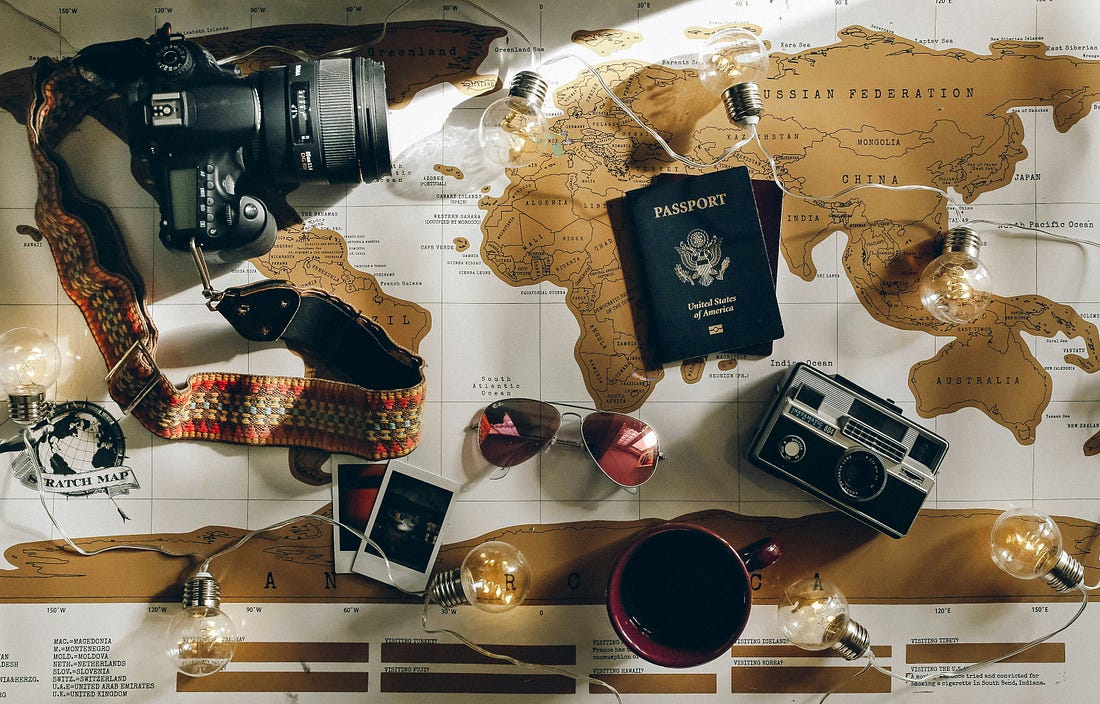
Friends, I no longer name things: neither the files, the folders, the slides that need a title. All of it gets named by something else now, and named better than I managed, which stings for about a second and then doesn’t, because we’ve moved on…from the busywork. I no longer write up my own meeting notes, and what comes back is more polite than I was in the room. There are tools for that. I no longer read a document to find the one thing I need from it. I no longer stitch an answer together across a dozen open tabs. I no longer agonise over the wording of an awkward message before I send it. I no longer remember things I know I could find again in seconds. I no longer nudge a text box into place with the arrow key, then the other arrow key, for eleven minutes, hunting through four nested menus for a setting I was certain existed. Because there is a button or a tool for that. I no longer sit with a hard problem long enough to get bored by it, although I try to because I miss the friction and I no longer make the first bad version of anything, because the instant competent one is right there. Maybe I’m just becoming average and efficient? I ran out of space on my Mac last week. I thought 256GB was a lot, but no, videos of podcasts make this feel severely inadequate. A year ago I’d have lost an afternoon working out why. This time I asked ChatGPT, and it walked me through the whole process like a private investigator and gave me back half a day I’d already crossed off. Some of what I’ve handed over I’m glad to be rid of. That was one of them. None of that keeps me up at night. The things that catch me cold are at home. I no longer cook from the recipe book. We (actually me) made one ourselves, a proper family one (well those handed down and stolen from magazines), the recipes that matter to us (moreso by my wife for us) written down so they wouldn’t get lost. It’s on the shelf, on the other side of the room, and I can’t be bothered to get up and take it down. So I ask for the recipe instead with intricate prompting based on the amount of food we have, get it to the gram, and cook a thing we already own, out of a book we made, without once opening the book. The holiday was the one time I caught myself doing it. We decided, just two weeks ago, late and on not much of a budget, to get away somewhere close. I’d been putting it off for weeks, what with the book and everything hanging off the book, and then one evening we just settled on Portugal. The first thing I did wasn’t to open a machine. It was to ask three friends. One had been to Porto last year. One goes every year, with the settled superiority of a man who has a favourite bakery over there. One is going for the first time this year and had already done the exact research I was about to do, so I stole his homework on the safe assumption that he’ll never read this. His picks didn’t beat mine. They rarely do. I’m thorough to the point of being weird, but it has never once won me anything. His homework went in the pile all the same, because everyone’s method is part magpie, and this one is mine. So I had a great pile of digital recommendations. Then came AI. Four of them open at once, which is a sentence that would’ve meant nothing to me two years ago and is just an ordinary day now. I asked each one where to stay and they argued with each other, confidently, the way they do, because they’ve all read different libraries and it shows. One kept pushing a neighbourhood the other three didn’t rate. Working out which of them to believe is a skill nobody’s put on a CV yet. I’ll admit, and it costs a certain loyalty to admit it, that the thing running the whole operation was ChatGPT and not Claude, and it was damn good at it. I gave it the friends’ recommendations, the budget, the preferences, all the context including gluten-free restaurants, then took what it said and fed it to the others to see who flinched. There’s a graveyard behind all this, and I’m old enough to have watched it fill up. Before there was one place to search, there were dozens, and they had names like a bad night out, AltaVista, Yahoo! and Lycos and Excite (the branding guy must have thought the Internet was superexciting!), and Ask Jeeves, who was a butler we were somehow supposed to ask….and HotBot, which I won’t be defending. They fought each other to a standstill and lost, all of them, one letter off a stupidly large number and now just means looking something up. I don’t mourn any of them, and I couldn’t tell you when I stopped choosing between them. We’re doing it again, higher stakes, stranger names. I type the private business of my week into a chatbot named after a Frenchman, then check it against a thing called “chatjeepeetee”, which sounds less like a name and more like a noise a fax machine used to make, and none of that strikes me as strange any more, which actually is the strange part. In a few years one of them will have won and the rest will sound like Ask Jeeves. Someone will say, fondly, do you remember when we used to chat with it, and whoever they’re talking to won’t know what the chatting was for. All this while the Airbnbs were being swallowed up by savvy last-minute travellers like me. You’d land on a place, go off to check it against the master list, come back, and it’d be gone, taken by someone quicker or less fussy or just awake in another time zone. The research and the availability were in a race, and the research kept losing, which is a hard thing to accept about yourself when the research is your whole pride. Near the end, the machines stopped being any use to me. The restaurants, the trains, whether a street is actually charming or just gets described that way in every listing, that’s the last mile, and I figured out that last mile myself. I messaged the friend who goes every year. The machines had opened it up to a hundred options, and it was a person, in the end, who shut it down. Somewhere in the middle of all this I remembered we used to do the whole thing with a book. The Lonely Planet, fat and orange-spined, carried in a rucksack and written in with a biro. I’ve still got several. They’re turning into the Lonely Planet of paper, an object from a world that has moved along without them. I’ve handed the whole apparatus down to my eldest daughter, the layering and the cross-checking and the sheer stubbornness of it, so she gets the method and not just the answers, because the answers go stale fast and the method, mostly, doesn’t. Purely by chance, while writing this, my mum messaged me in the middle of clearing her bookshelf. “We have some Lonely Planets - do you want them?” For a millisecond I thought it would be nice to see an artefact of history. But I just said no thank you. We have all moved on. I keep an A to Z (pronounced in the UK: A to Zed) road atlas in the front of the car, in the compartment where the engine used to sit, the one the manufacturer wants me to call a frunk and I call the front boot, because I’m not an animal. I had it in my old car and I haven’t opened it in years. I don’t think I have actually used it once. I keep it for the day the satellites go dark and the phones forget the roads, probably at the end of the world, when I’m part of the real version of the Last of Us. It stopped being a map a long time ago. It’s a talisman now. I keep it just in case, though I couldn’t tell you in case of what. There’s a dictionary on a shelf I never open, though I’m glad it’s there, the way you’re glad of a fire extinguisher. At school we used to race to find a word in it first, thumbing through the little Oxford edition we all carried around, and the winner felt like a god for about a minute. In my own recent clear out, I found typed-out directions to my parents’ old house, printed and folded and ready to hand to a visitor, from back when the alternative was reciting the route down the phone. Turn left at the church, they said, and keep going past the tennis courts. If you are coming from the other direction, then… I’ve no idea who was coming. Some of these artefacts aren’t objects at all, they’re phrases. I said water cooler moment to someone half my age the other day and watched them try to work out what a water cooler even was, and why anyone would build a friendship next to one. The phrase has outlasted the machine. The office is heading the same way, kept now less for the work, which happens anywhere, than for the things work was never really about. This summer, mostly, that means the air conditioning. It gets hotter earlier every year, and the more the honest reason to go in is to sweat through the commute and sit in a building colder than your oven of a study. We used to go in so someone could see us doing the job. Before long the strongest argument for the commute will be that the office has aircon and the home does not. In that same clear out I found the address book. There are names in my own handwriting, and numbers I used to dial without thinking. Some of the people in it are dead now. Others I still message, and I couldn’t give you a single digit of their number, because I press a face on a screen and let the machine do the remembering. The book holds more of my life than I do. Some things I’ve taken back and not because I had to. I gave up notebooks for a good decade. I typed everything, because typing was the future and paper was what the future was busy replacing. I’m back on a notebook now, in ink, and unbearable about it. Nothing made me. I just think better with a pen in my hand, a scribble of a mindmap, when I got tired of talking to the machine all the time. I don’t take Spotify’s recommendations either. I decided that a while back, and I’ve held the line with the conviction of a man who is fairly sure he’s being handled. The trouble is, the whole field is full of music made by nobody now, playlists put together by nothing, songs that were never actually sung, and the algorithm can’t always tell the difference, or doesn’t care to. So I’ve gone backwards on purpose, which means Hans Zimmer and the big soundtracks on one day, when I want the world to feel enormous, and nineties hip-hop on another, when I want it to feel like mine. I’d sooner pick the playlist than have it pick me. I know that makes me sound like a man who thinks the world is out to get him. It isn’t out to get me. I know how that sounds but I don’t especially care. A man on our road wants to turn his house into a care home. He wanted to last time, too. Last time two of us objected and it didn’t go through. This time twenty-five households are against it, on the simple grounds that the house can’t do what he wants it to do and the street can’t take what would come with it. This time I’m one voice in five who actually bothered to write, which is a luxury I didn’t have before. So I didn’t read the planning document. I listened to what the road was saying in the WhatsApp group, made my mind up, and got the machine to write the objection for me. Then my elderly neighbour needed the same thing doing, so I did hers as well, on a different machine, in about the time it takes to shout “I hate the council”. I’m not proud of that, and I’m not ashamed of it. It was a busy month, the objection mattered more as a thing that existed than as a thing that was mine, and there was nobody I could bill the hours to. Some things need to be yours. Most things just need doing. The trick is knowing which before you’ve already spent yourself on it. I’ve written one of these essays every week for ten years. And it’s dawned on me, more than once lately, that every essay I send out is a lesson too, and not only for you, because the machine is reading it as well. Everything I publish about how I think goes in as a small deposit into the thing that’s learning to think like me, and I do it anyway, every Sunday, feeding it, feeding it, feeding it and you and the machine that will scrape me can probably tell my mood and prescribe some medication for me at some point. So I’ve started holding things back. Not the essays, obviously, since you’re reading one right now. But there’s the turn I haven’t written down, and the idea I’m still walking around, and the way I’ve come to see some particular thing that I don’t want to hand over yet, because the moment it’s on the page it stops being only mine. I keep a few things off the page the same way I keep a few playlists off the algorithm. It’s the last thing I still do entirely by hand, and it’s the one I mean to keep custody of. I no longer name things. But I still decide which of them are worth naming, and every so often, when the name that comes back is better than the one I had, I go with mine anyway, because it’s mine and I know where it came from. The machines opened every field I walked into this year wider than I could have alone. The decisions that mattered were still mine. A few of them I made by saying nothing. No model has any idea what you’ve decided not to tell it. Keep something back. SuperSkills: The Seven Human Skills for the Age of AI is available globally. I came up with the name myself without using a machine. superskillsbook.com Stay Curious - and don’t forget to be amazing,
PS. If your organisation is thinking about AI and human capability, I keynote and advise on this. Tools I Use:
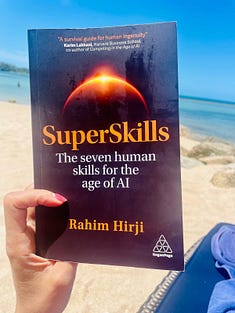
SuperSkills in the Wild:Send me images of your copy of SuperSkills and I will include them here. Bonus point for creative locations, tourist spots, spotting of the book in the wild, in a book shop etc.
Recommended Reading:
If you enjoyed this, forward it to someone who’d find it useful. And if you haven’t yet, order SuperSkills at superskillsbook.com Rahim Hirji is the author of SuperSkills: The Seven Human Skills for the Age of AI (Kogan Page, July 2026) and founder of The SuperSkills Intelligence Company. Box of Amazing has been read by over 25,000 people across 50+ countries for ten years.
|





Comments
Post a Comment
VHAVENDA IT SOLUTIONS AND SERVICES WOULD LIKE TO HEAR FROM YOU🫵🏼🫵🏼🫵🏼🫵🏼