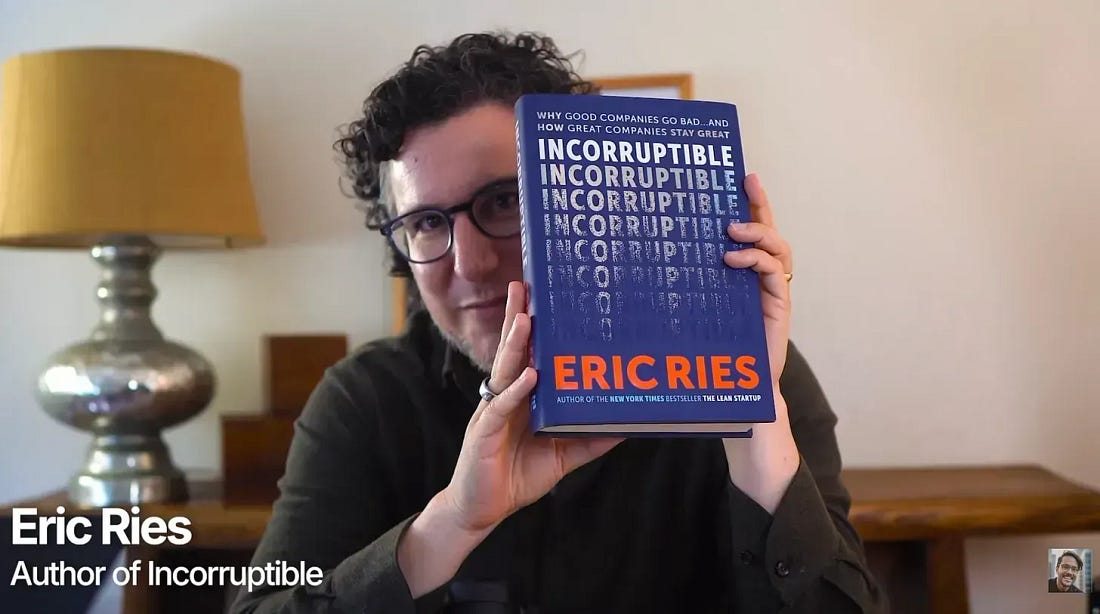
The PM's Guide to Governance with Eric Ries, author of The Lean Startup

The PM's Guide to Governance with Eric Ries, author of The Lean StartupHe might be one of the most influential tech writers ever, and he drops a masterclass
Check out the conversation on Apple, Spotify, and YouTube. Brought to you by: Arize
Trace, evaluate, and fix your AI agents before broken behavior ships to users. Today’s EpisodeEric Ries is the Lean Startup Guy. He was an early call from Dario Amodei when he was founding Anthropic. Dario could afford that call and make the connection. But what about you? I’m making that call for you today. Eric spent the last few years creating his next movement after Lean Startup, Incorruptible, and I get the low down:
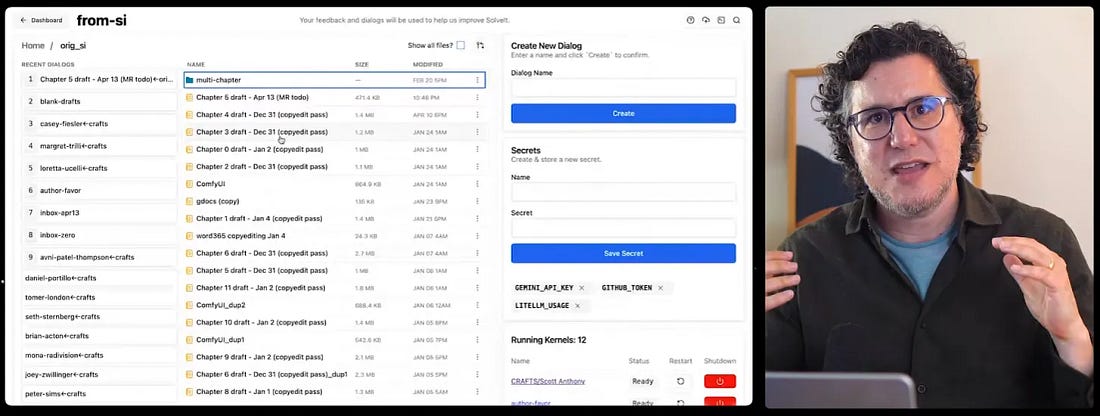
But this isn’t the same as other podcasts you may have seen with Eric. He goes behind the scenes to show how he wrote Incorruptible with his AI tool Solveit and live screenshares his writing workflow with Claude. Check it out: 🎊 To celebrate, I’m giving away 10 copies of Eric’s book Incorruptible:
All you have to do is fill out this short survey on PM salaries. 🆓 I’m doing a free webinar Thursday on getting AI PM interviews. Join me: The next cohort of my LandPMJob program starts August. If you want my 1:1 coaching, sign up. Today’s Deep DiveI’ve written up the PM’s Guide to Governance:
Plus, two bonus sections:
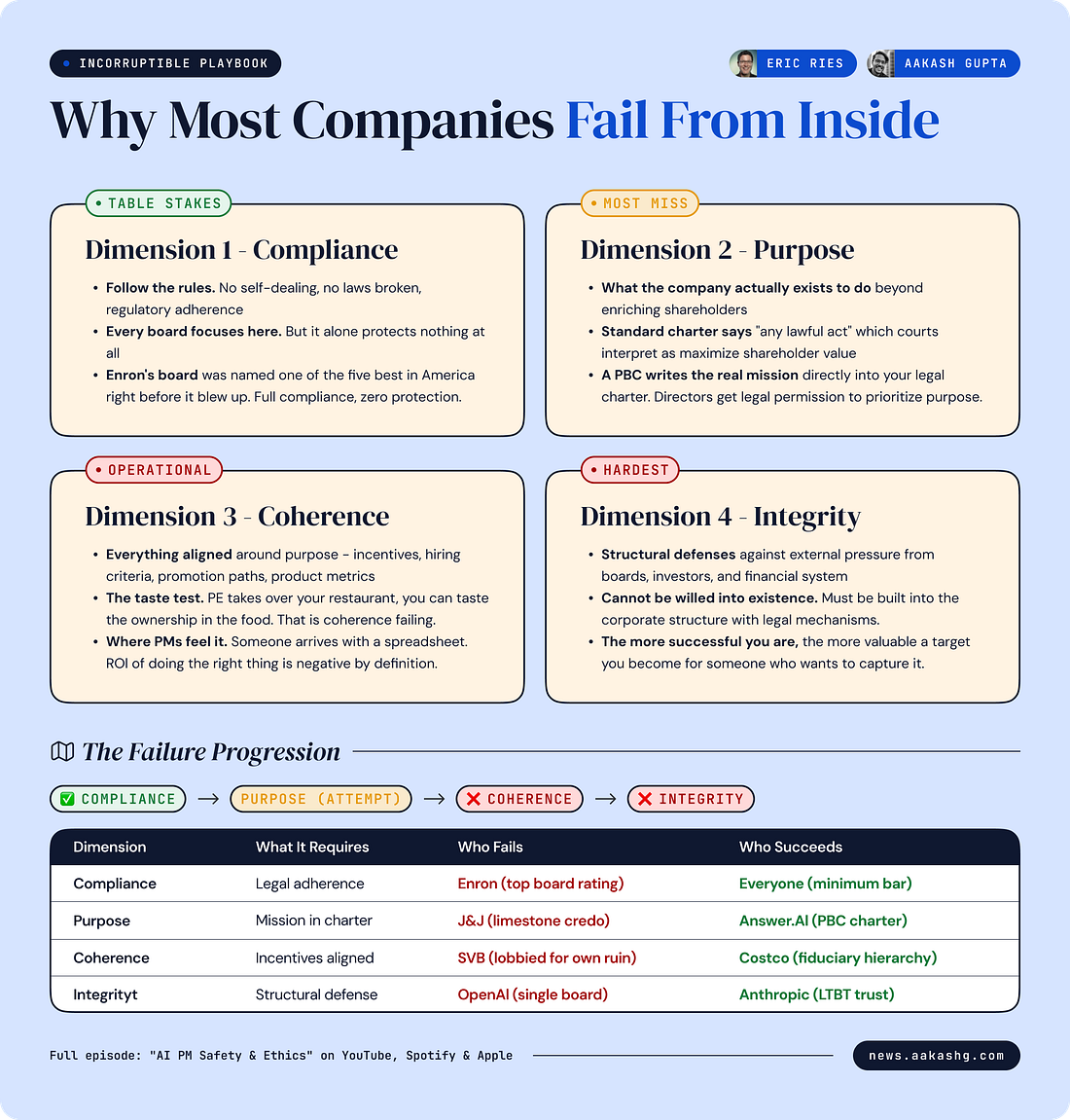
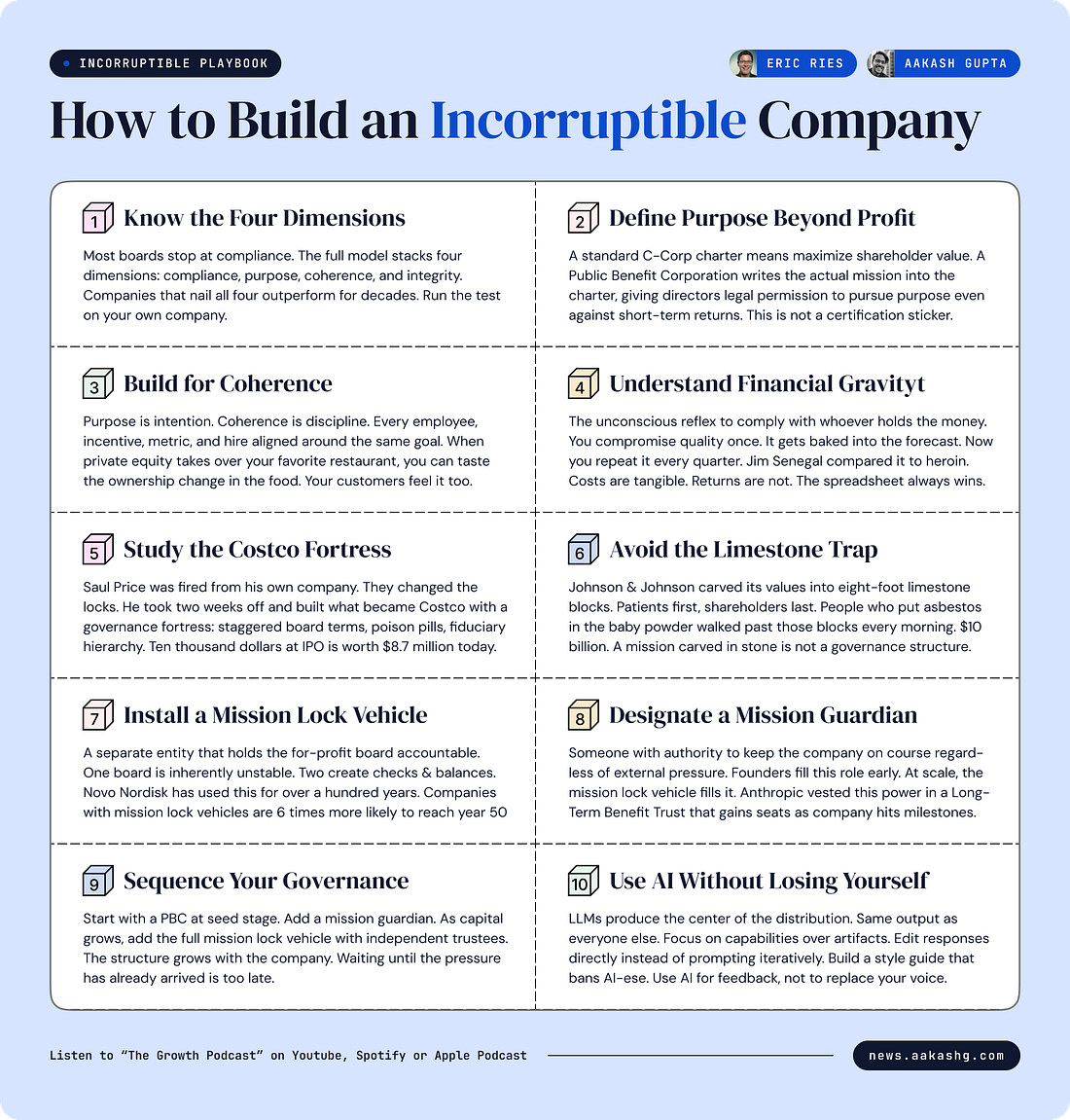
1. The four dimensions of IncorruptibilityIf you start studying the world’s most lasting companies, the first thing you’ll learn is that:
So how do you avoid them? Four things:
For PMs, this can often feel mainly like it’s for founders. True. But:
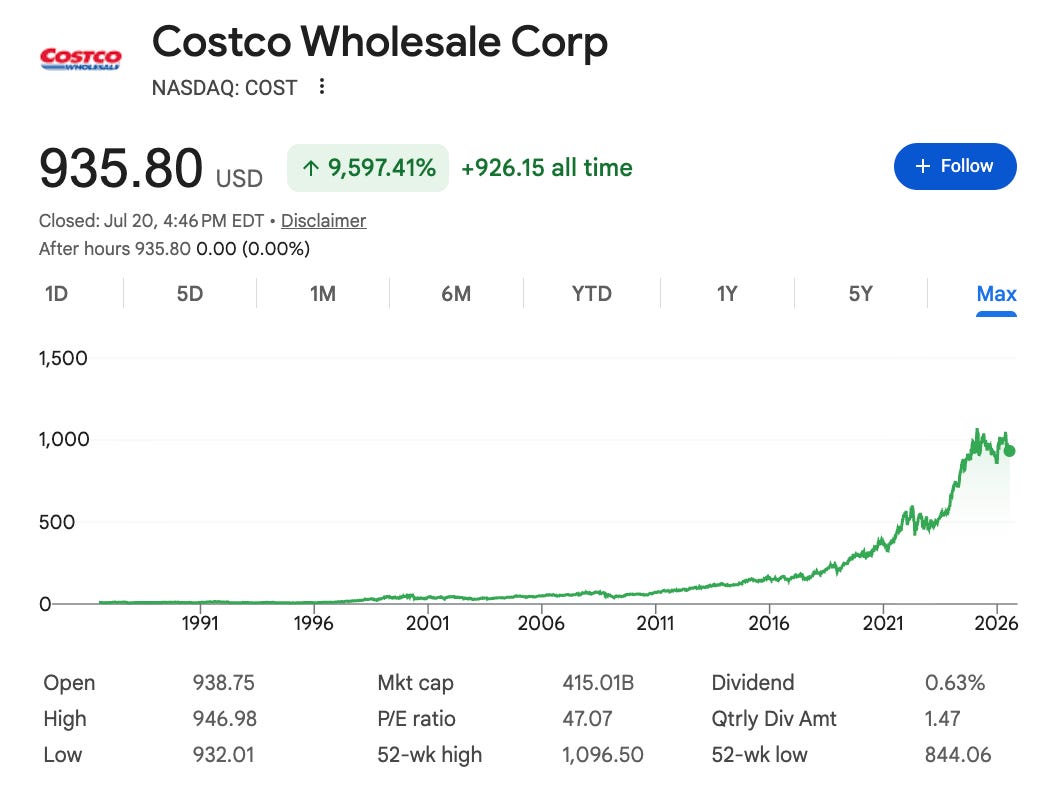
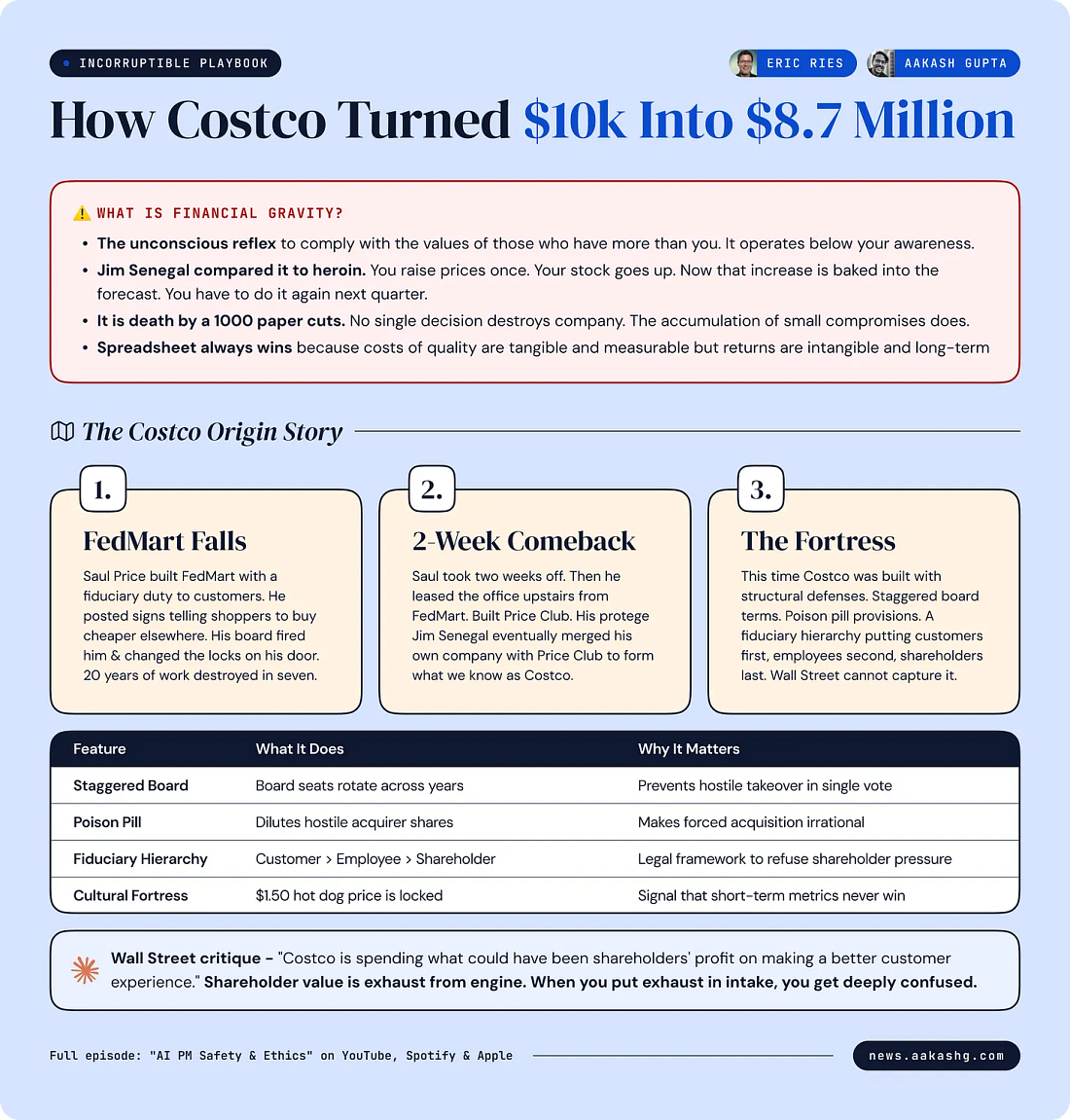
2. The Costco Case StudyLet’s talk about Costco for a second. It’s one of the best performing companies of all time:
How has Costco had such longevity? Well, it actually starts with disappointment. You see, Costco was co-founded by a guy named Sol Price. Sol originally created FedMart. It became a very successful company, but he gave control to investors. Eventually, the board wanted growth while Sol would do things like tell customers to go buy from a competitor down the street if they had a cheaper price. So, the board locked Sol out of his own company. It didn’t work well for them. By 1982, FedMart was in liquidation. Sol, and his mentee Jim Sinegal, didn’t want to follow in FedMart’s footsteps. So when they built Costco (a merger of their two companies), they built a governance fortress, with staggered board, poison pill, fiduciary hierarchy, and a cultural fortress:
The cultural fortress is perhaps the hardest to capture part. How do you build an Incorruptible culture like Costco? Eric takes inspiration from Jim Sinegal:
You have to avoid “financial gravity.” $10,000 invested in the S&P 500 in 1985 is worth $151,000 today. The same $10,000 in the Costco IPO is worth $8.7 million. 3. How to structure a company from day oneMany PMs go on to become founders. If that’s you, how should you structure your company? Dario Amodei called Eric when Anthropic was still figuring this out. Here’s the advice you can get from that call - without the access:
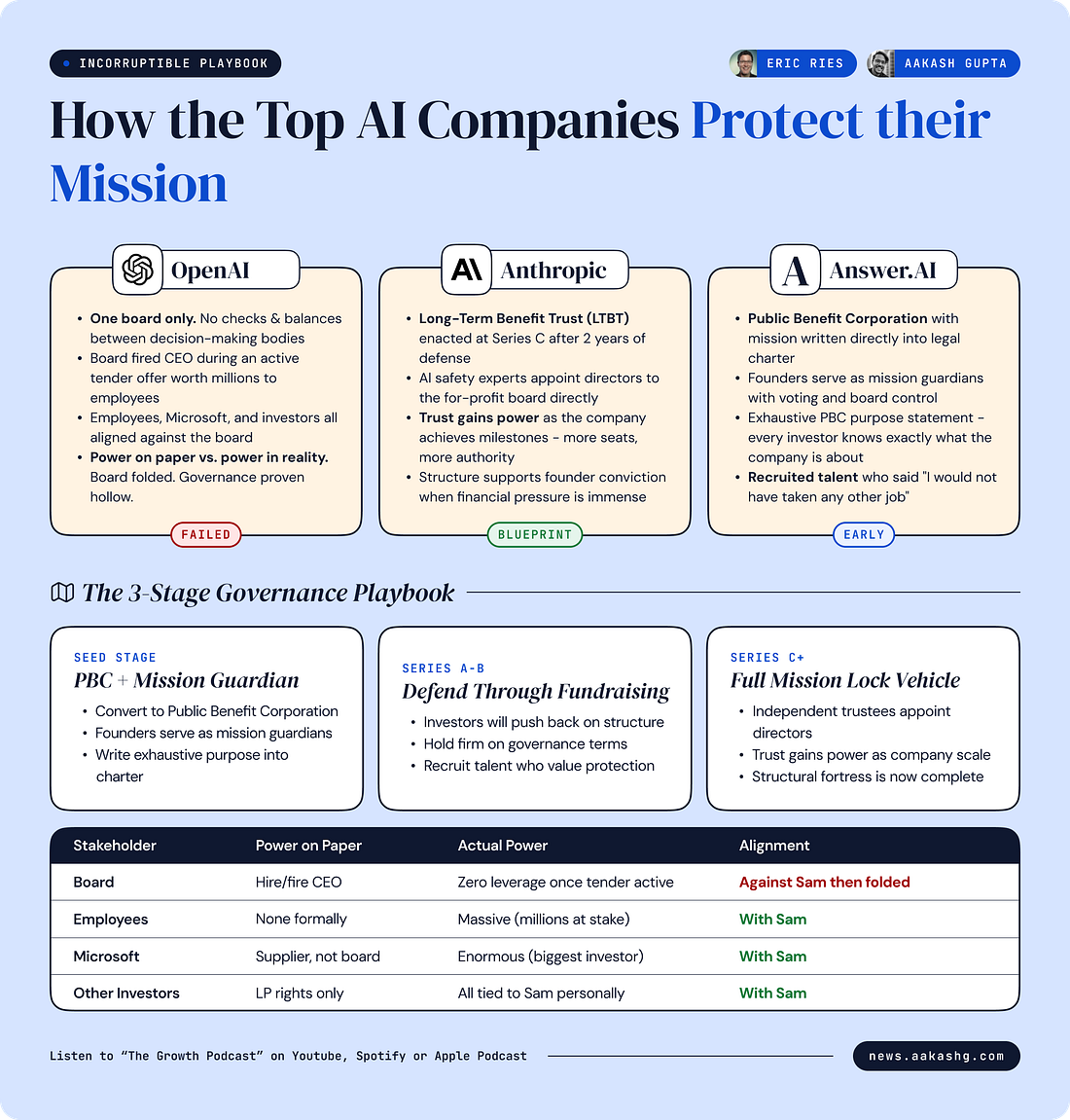
Seed Stage
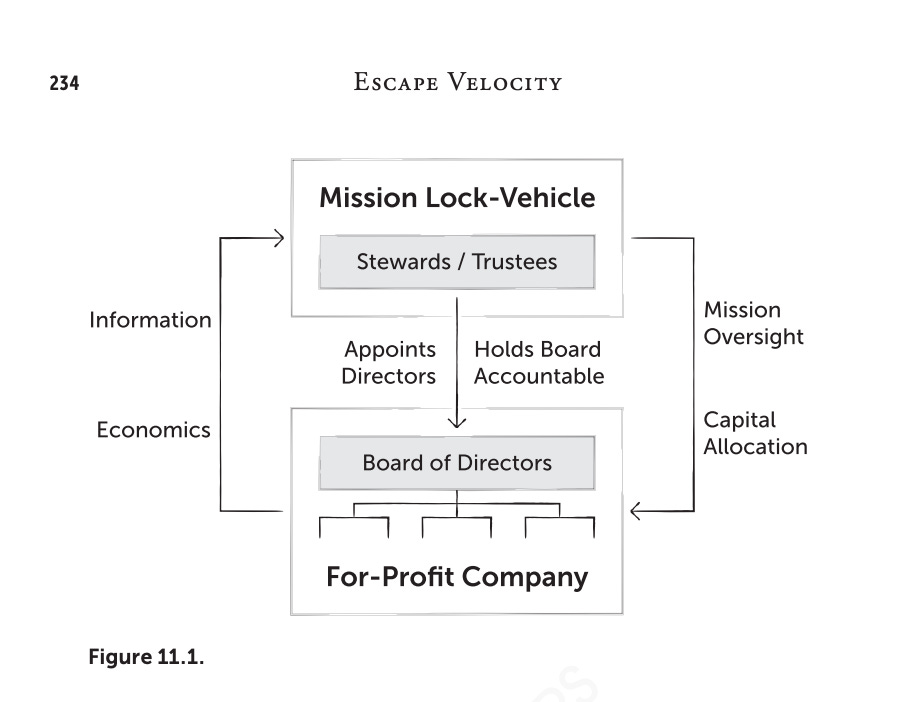
Series A-BLike Anthropic created and defended a Long-Term Benefit Trust, you will have to do the same. Investors may want to change the terms. Hold the line. Series C+At larger companies, a mission lock vehicle can take the role of mission guardian:
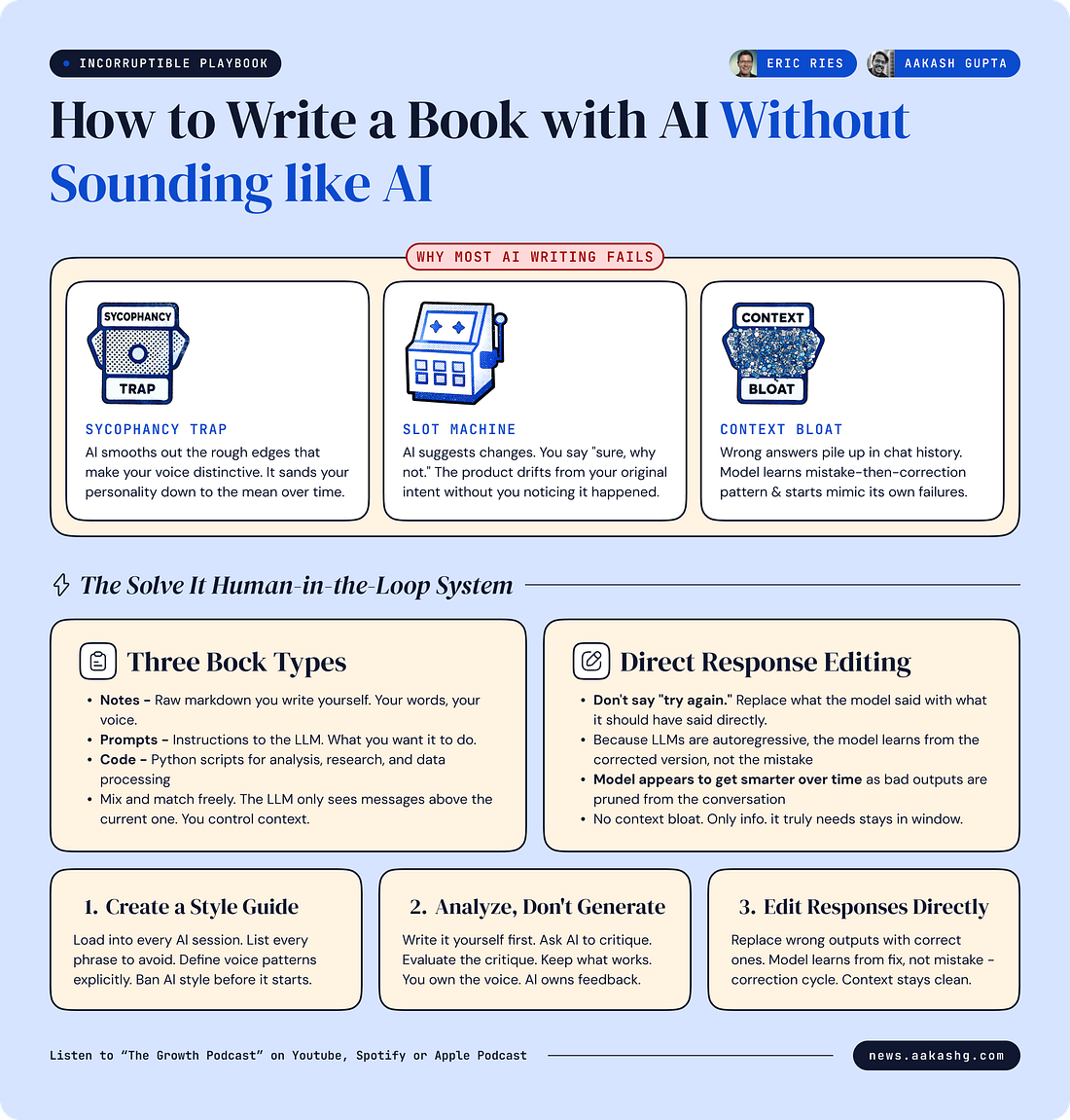
This is what Answer.AI, Eric’s company did, and what Anthropic did. Just remember, structure isn’t everything. Me: Can I just copy-paste Costco or Novo’s governance structure? Eric: No. There isn’t a universal blueprint. The right governance depends on your company’s mission, ownership, funding, and stage. What works for Costco won’t necessarily work for Anthropic or for your startup. That’s why the next question should be, “How can I design my own company?” So that covers it on our short tour through governance for PMs. Now, two bonuses. Bonus 1: How Eric Ries uses AI to writeThe thing to avoid in the AI era is being called slop. How does Eric do it?
The book Incorruptible was written inside Solve It, the AI platform from Answer.AI. The approach is fundamentally different from prompting. How it works:
Eric then took it to the next level. He had 600+ test readers leave structured comments, which the tool helped him organize and do months of daily turns on. Bonus 2: The Lean Startup methodology in the AI eraDoes the most famous business framework ever created break when a single training run costs $10 billion and takes two years? No. But you have to understand what it actually is. Build, Measure, Learn is a principle for operating under uncertainty. Its essence is:
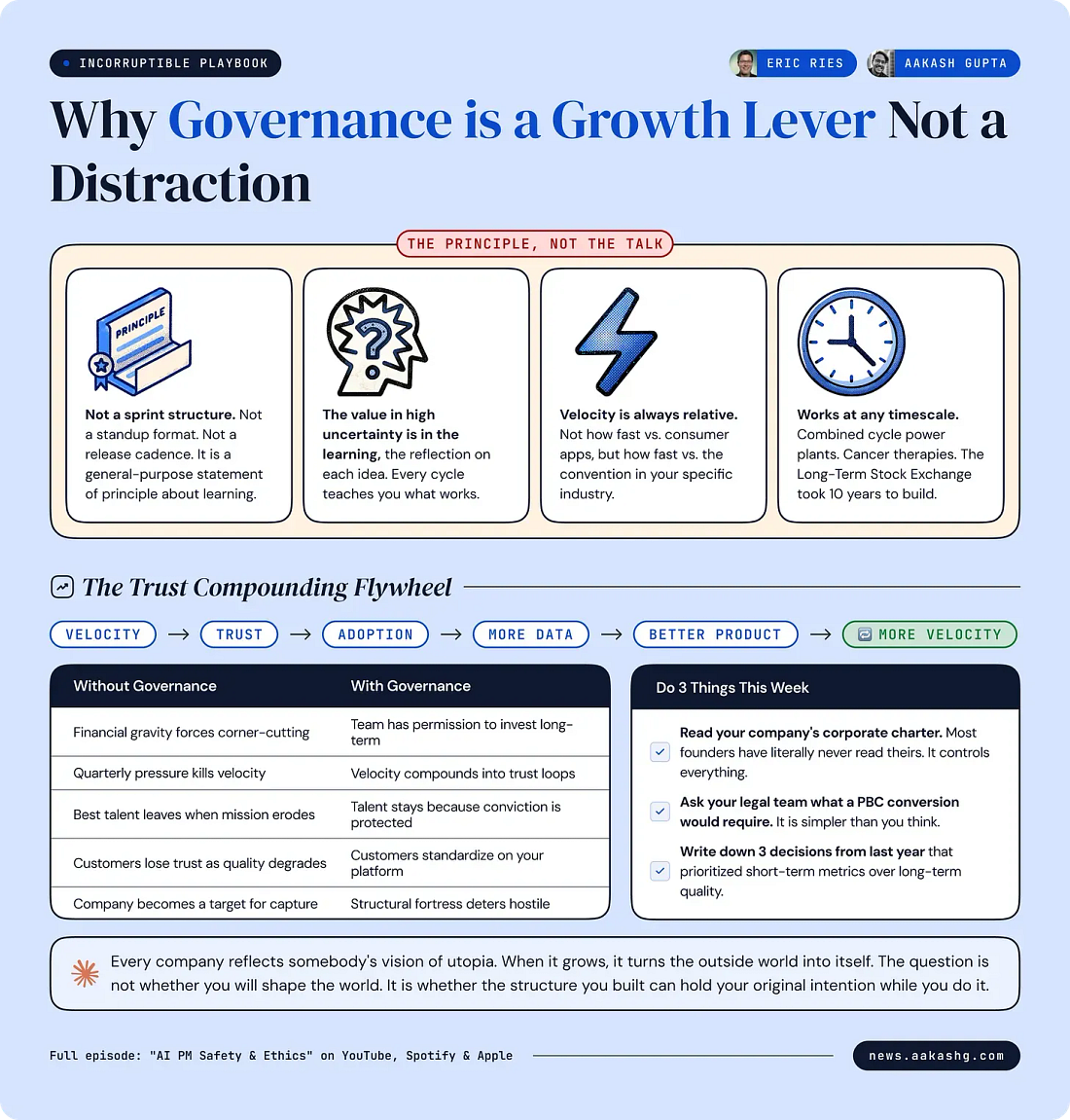
The framework has been used on power plants, cancer therapies, even the long-term stock exchange. It works in the AI era too. What matters is whether you can go faster than the convention in your industry.
Claude Code is emerging as a standard partly because Anthropic’s product organization has unparalleled velocity. Shipping velocity does more than accelerate learning. It compounds trust through two effects:
And how does Claude Code ship so fast? Their velocity is powered by the governance structure that gives the team permission to invest in the long term without quarterly pressure to cut corners. And that’s how we come full circle. Finally, here’s a one-sheeter you can print on governence:
Where to find Eric Ries
PS1. If you want access to my AI tool stack - Airtable, Dovetail, Arize, Linear, Descript, Reforge Build, Magic Patterns, Speechify, and Mobbin - grab Aakash’s bundle. PS2. Please subscribe on YouTube and follow on Apple & Spotify. It helps! Invite your friends and earn rewards
If you enjoy Product Growth, share it with your friends and earn rewards when they subscribe.
|

%26stroke%3Dnone%26strokeWidth%3D3.6)





Comments