 Whatcom County FSA Updates - January 2026 In This Issue: 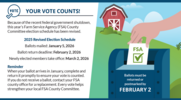 The U.S. Department of Agriculture (USDA) has mailed ballots for the Farm Service Agency (FSA) county committee elections to eligible farmers and ranchers across the country. To be counted, ballots must be returned to the Whatcom County FSA office or postmarked by Feb. 2, 2026. Each committee is comprised of three to 11 elected members who serve three-year terms. Newly elected committee members will take office March 2, 2026. County committee members play a key role in how FSA delivers disaster recovery, safety-net, conservation, commodity and price support programs, as well as making decisions on county office employment and other FSA program delivery issues. Galen Smith has been nominated and is running in the election for LAA 3, which includes the east side of Whatcom County. Smith has been nominated to serve as a committee member for a 3-year term. He resides in Deming and alongside his family, operates a 2000 animal dairy and crop production farm. He has served as treasurer for the Whatcom County Dairy Federation, chaired a local River and Flood Advisory Board and volunteered at his local fire district as a first responder. He currently serves on the board of directors at Whatcom Family Farmers and the local CHS board of directors. To be eligible to vote in the county committee elections, producers must participate or cooperate in a USDA program and be assigned to the LAA that is up for election. Each year, at least one Local Administrative Area (LAA) in each COC jurisdiction is up for election on a three-year rotation, and each producer is assigned to vote in a single LAA. A cooperating producer is someone who has provided information about their farming or ranching operation to FSA, even if they have not applied or received program benefits. Producers can identify LAAs up for election through a geographic information system locator tool available at fsa.usda.gov/elections and may confirm their LAA by contacting their local FSA office. Eligible voters who do not receive a ballot in the mail can request one from the Whatcom FSA office at 914 Citadel Dr., Ste. C, Everson, WA 98247 or call 360-592-6115. | Top of page 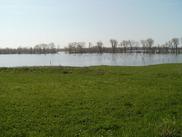 If you've suffered livestock feed or grazing losses due to recent flooding, you could be eligible for assistance through the Emergency Assistance for Livestock, Honeybees, and Farm-Raised Fish Program (ELAP). ELAP covers physically damaged or destroyed livestock feed that was purchased, or mechanically harvested forage or feedstuffs intended for use as feed for your eligible livestock. In order to be considered eligible, harvested forage must be baled. Forage that is only cut, raked or windrowed is not eligible. You must file a notice of loss to your local FSA office no later than the annual program payment application date, which is March 2, 2026, for calendar year 2025 losses. ELAP also covers up to 150 lost grazing days in instances when you've been forced to remove livestock from a grazing pasture due to wildfire. You should maintain records and receipts documenting that livestock were removed from the grazing pasture due to flood, costs of transporting livestock feed to eligible livestock, receipts for equipment rental fees for hay lifts, feed purchase receipts and the number of gallons of water transported to livestock due to water shortages. For beekeepers, ELAP covers beehive losses (the physical structure) in instances where the hive has been destroyed by a natural disaster including flooding. For more information regarding ELAP, contact the Whatcom USDA Service Center at 360-592-6115 or visit fsa.usda.gov/disaster. | If you're an orchardist or nursery tree grower whose experienced losses from natural disasters during calendar year 2025, you must submit a TAP application either 90 calendar days after the disaster event or the date when the loss is apparent. TAP provides financial assistance to help you replant or rehabilitate eligible trees, bushes and vines damaged by natural disasters. Eligible tree types include trees, bushes or vines that produce an annual crop for commercial purposes. Nursery trees include ornamental, fruit, nut and Christmas trees that are produced for commercial sale. Trees used for pulp or timber are ineligible. To qualify for TAP, orchardists must suffer a qualifying tree, bush or vine loss in excess of 15 percent mortality from an eligible natural disaster, plus an adjustment for normal mortality. The eligible trees, bushes or vines must have been owned when the natural disaster occurred; however, eligible growers are not required to own the land on which the eligible trees, bushes and vines were planted. If the TAP application is approved, the eligible trees, bushes and vines must be replaced within 12 months from the date the application is approved. The cumulative total quantity of acres planted to trees, bushes or vines, for which you can receive TAP payments, cannot exceed 1,000 acres annually. Contact the Whatcom FSA office at 360-592-6115 for more information. Top of page  | | January 15, 2026 - 2026 acreage reporting deadline for perennial tree fruits and berries. January 19, 2026 - Birthday of Martin Luther King, Jr. USDA Service Centers will be closed. January 23, 2026 - Deadline to submit an application for the Milk Loss Program January 23, 2026 - Deadline to submit an application for the On-Farm Stored Commodity Loss Program February 16, 2026 - Washington's Birthday. USDA Service Centers will be closed. March 2, 2026 - Deadline to complete livestock disaster program applications for losses that occurred in 2025 (LFP, LIP, and ELAP). March 16, 2026 – Deadline to obtain 2026 crop year NAP coverage for artichokes, beets (for seed or fresh), buckwheat, camelina, carrots (for fresh or processing), hemp, mustard, radish (for seed or fresh), small grain forage (wheat, barley, oats, peas), and any other spring planted crops not mentioned in other closing dates. | Top of page |







Comments