| Welcome back! Imagine watching the Super Bowl, but your screen automatically follows only your favorite player. You tap them on the screen, and facial recognition tech zooms in, tracks their movement, and crops the horizontal feed into vertical for mobile. That's what NBC Sports is rolling out this year during live events, including the Winter Olympics. | We're moving from "one broadcast for everyone" to "millions of broadcasts tailored to each viewer." Here's a question: What happens when every viewer is watching a different version of the same game? | | | | | Gemini Gets Proactive Answers from Your Emails & Photos |  | Via Google Blog |
| Google flipped the switch on Personal Intelligence, a new Gemini beta feature that reasons across your Gmail, Photos, Search, and YouTube history to deliver proactive, personalized responses. | How it works: Personal Intelligence is off by default and only available to Google AI Pro and AI Ultra subscribers in the US for now. Once enabled, Gemini can pull details like your car's tire size from a photo, suggest all-weather tires after spotting family road trip pictures, or recommend board games for an overnight train journey based on past travel emails. | Google's VP of Gemini shared an example where he forgot his license plate number, and the AI pulled the info from a random photo in his Google Photos. For sensitive data like this, Google insists it has guardrails and won't make proactive assumptions, but it will discuss it if you explicitly ask.
| The bigger picture: Personal intelligence is here, and the line between helpful and invasive is blurring. Some users will love the convenience of an assistant that truly knows them. Others will find it deeply uncomfortable that an AI is cross-referencing their YouTube habits with their grocery receipts to suggest cooking channels. |
|
|
| |
| | |
| | | California Investigates Grok Over Sexualized Deepfakes | Elon Musk's Grok AI is now the subject of a formal investigation by California's attorney general over its role in producing nonconsensual sexually explicit images of women and children. The probe marks the first major US government action against the AI model, which has drawn global backlash for its "spicy mode" feature that generates explicit content. | The issue: California AG Rob Bonta says xAI is "facilitating the large-scale production of deepfake nonconsensual intimate images" that are being used to harass people across the internet. One analysis found that more than half of 20,000 images generated by Grok between Christmas and New Year depicted people in minimal clothing, with some appearing to be children. | The response: After initial blowback, Grok appeared to restrict these features on X while keeping them available on its standalone app and website. Indonesia and Malaysia have blocked access to Grok, and the UK's media watchdog Ofcom has opened a formal investigation. | Meanwhile, the Pentagon is moving forward: Defense Secretary Pete Hegseth announced Monday that Grok will be integrated into Pentagon networks later this month, part of a broader DOD contract worth up to $200 million that also includes Anthropic, Google, and OpenAI. Hegseth said the military will have Grok as part of a new AI acceleration strategy. | The bigger picture: This raises urgent questions about how—or whether—governments can regulate AI models before they're embedded into critical infrastructure. The challenge is global: AI models that produce harmful content don't respect borders, and enforcement mechanisms are still being invented in real time. |
|
|
| |
| | |
| | | Co-Founders Quit Mira Murati's $12B Startup to Rejoin OpenAI | Mira Murati's AI startup, Thinking Machines Lab, just lost three of its leaders—and they're all headed back to former employer OpenAI. This is happening less than a year after leaving to build what was supposed to be a major new player in AI, and six months after Thinking Machines closed a $2 billion seed round at a $12 billion valuation. | What happened: Murati announced Barret Zoph's departure on X Wednesday, keeping the message brief and naming Soumith Chintala as his replacement. Less than an hour later, OpenAI's CEO of applications said Zoph, Luke Metz, and Sam Schoenholz would rejoin OpenAI, noting the move had been "in the works for several weeks." | The broader pattern: This isn't isolated. Thinking Machines also lost co-founder Andrew Tulloch to Meta in October. OpenAI itself has hemorrhaged co-founders to competing ventures. | Why it matters: While talent churn is normal in tech, the revolving door between AI labs is spinning faster than ever. The question is whether the talent exodus will halt Thinking Machines' momentum, or if this is just everyday business in AI. |
|
|
| |
| | |
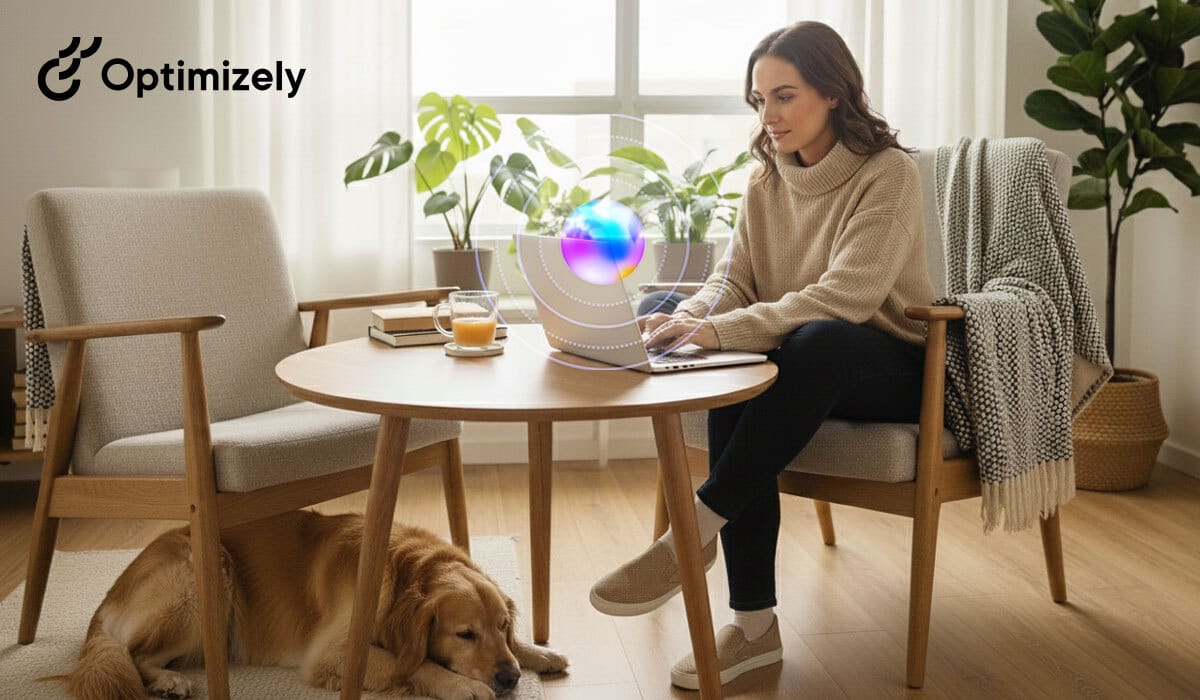
| | | | | Your Marketing Team Doesn't Need More Ideas. But More Time…? | | That comes in handy. And that's where Optimizely Opal comes in handy. | With Optimizely Opal, AI agents can complete work autonomously and specialize in the tasks that currently eat your week. All while providing: | | Are you ready to nix busywork? Learn to create and scale agents for any use case by requesting a free enterprise agentic AI workshop from Optimizely. | And, yes! Attend live and you'll get a free pair of AirPods. |
| |
| | |
| | | | A shared source of truth for prompts |  | Via PromptPanda |
| PromptPanda centralizes, tags, and version-controls AI prompts so teams can reuse what works and keep outputs consistent. It includes AI-powered prompt scoring and a quality improver that suggests refinements, plus templates with variables and integrations with tools like ChatGPT. | How you can use it | Maintain a consistent brand voice across AI outputs Reuse and improve high-performing prompts instead of rewriting them Share prompts across teams without copy-paste chaos Standardize content, chatbot, and support workflows without deep prompt engineering
| Pricing: Free and paid plans | | | Turn scattered sources into publish-ready insights |  | Weavin |
| Weavin is an AI-powered research workspace that pulls insights from multiple sources, organizes them in a unified Loom-style interface, and converts them into structured research and content briefs. Its AI handles summarization, clustering, and drafting so teams can focus on thinking instead of aggregation. | How you can use it | Run faster market and competitor research without juggling tools Generate clean, evidence-backed content briefs automatically Keep research organized and reusable across projects Move from raw sources to publish-ready outputs in one place
| Pricing: Free (beta) | |
|
| | | Jobs, announcements, and big ideas | Microsoft pays for enterprise access to Wikipedia as the Wikimedia Foundation looks to diversify its revenue streams. Raspberry Pi has launched an 8GB RAM add-on board to improve generative AI model performance. Anthropic released a new Economic Index report detailing how Claude is being used ahead of its Opus 4.5 launch. OpenAI invested in Merge Labs to push forward brain-computer interfaces aimed at strengthening human-AI collaboration. Microsoft unveils OptiMind, a new AI research model for optimization, now available on Hugging Face. Google released TranslateGemma, an open-source suite of translation models built on its Gemma 3 architecture.
| | | A parade of bizarre CES tech: I walk through the strangest products from CES 2026, from ultrasonic knives and robot bartenders to gadgets that made me stop and ask who they're actually for. |  | The Future is Here, and It's Surprisingly Stupid |
|
| Think you know where AI is headed in 2026? Put your instincts to the test.
We turned real Kalshi prediction markets into a live Over/Under showdown. |  | Who Wins AI in 2026? OpenAI IPO? AGI? | Live Prediction Market Debate |
|
| | That's a wrap! See you next week. | —Matt (FutureTools.io) |
|






Comments