Your HigherEdJobs Job Alert for 01/10/2026 has returned 5 jobs that meet the search criteria you specified. 5 new jobs that match your criteria Senior Auditor University of Michigan in Ann Arbor, MI Operations Coordinator ...
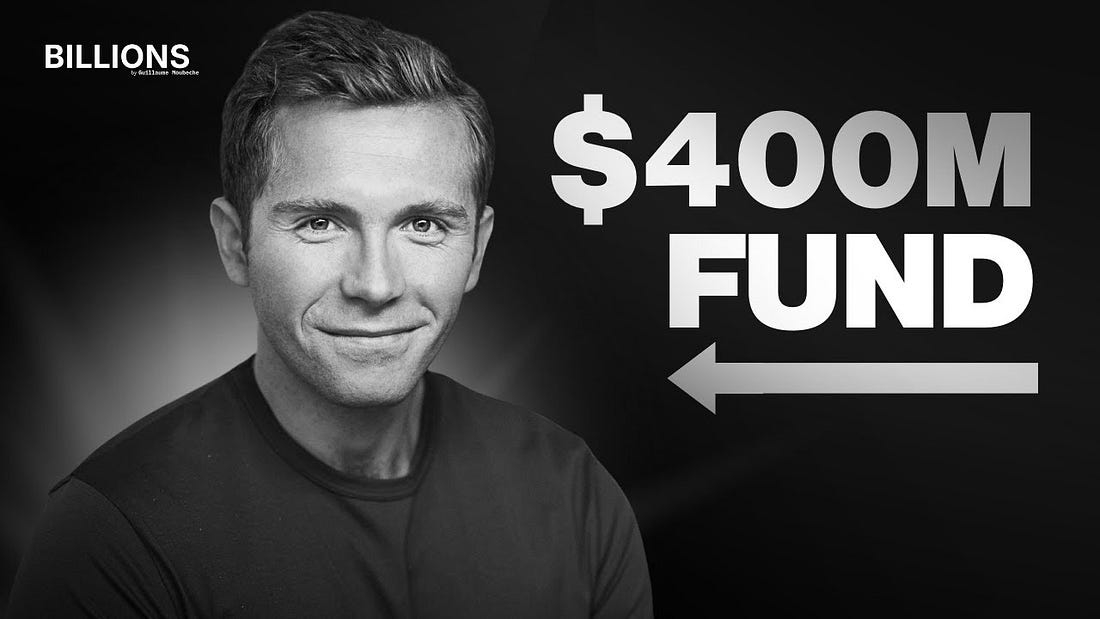
How Harry Stebbings Turned a Podcast Into a $400M Venture Fund10 Lessons on Content, Deal Flow, and Building Distribution Before Capital
Most people think you need capital to start a venture fund. Harry Stebbings proved distribution comes first.
At 18, he started recording interviews in his bedroom in London. No connections. No track record. No money. (Poner no se cuantos unicorns post seb) Eleven years later: $400 million fund, 1,000+ interviews, millions in ARR generated for portfolio companies with single posts. This playbook focuses on distribution as the engine that transforms content into capital. brought to you by Vanta 📋 ISO 27001, simplified for startupsISO 27001 is powerful—but it’s not exactly startup-friendly… Vanta’s checklist breaks it into clear, doable steps your small team can tackle without burning weeks 👇
No filler—just the essentials to help you move fast and build with confidence Here are the 10 systems behind the podcast that became a venture machine 👇 1. The $400M Deal Harry Passed On (And the $115M in Carry He Lost Forever) Harry Stebbings met Alex Bouaziz at Deel’s seed round and passed. Deel became one of the fastest-growing payroll companies in the world. That decision cost him $400 million in potential gains. The math: $8 million fund, $250K investment at $12 million valuation, 30% carry. He walked away from $115 million in personal carry. Why? He looked at Paychecks, ADP, massive entrenched incumbents.
He knew Alex was unbelievable. He let the market override the founder. Most investors would bury this story. Harry brings it up in every interview. That transparency is the tell. Try this 2. Why Harry Passed on Two $5B+ Companies (And Changed His Entire Strategy)
Harry made the same mistake twice. First Deel, then Vanta. Christina Cacioppo was world-class. The company is now worth $5 billion with Sequoia leading. Harry could have invested at $12-15 million. But compliance? SOC 2? Five years ago, that market looked tiny and boring. Now Harry invests in any market if the founder is generational. Great founders find markets. If they don’t find one this time, they’ll find one next time. For investors If list one is strong and list two is your reason to pass, you’re making a mistake. 3. 3 Founder Signals That Beat Stanford, Y Combinator, and Every Other Credential Signal 1: Age of first entrepreneurial activityGreat entrepreneurs start young. Rarely at 27. They were building websites at 13. Selling sticker books at school at 7. The pattern shows up 90% of the time. Signal 2: Gaming background over credentialsYour clan in a gaming community is more indicative of success than your college. Gamers disproportionately outperform because they understand systems, competition, and collaboration. Signal 3: Broken relationship with a parentHard to say out loud, but it creates a chip on the shoulder. A desire to prove oneself. An unwillingness to let a parent see them fail. For boys, most often with a father. All three in one founder? Lot of green lights. For diligenceAdd these three questions to founder interviews. Track the correlation with your best investments over two years. 4. How an 18-Year-Old Got Guy Kawasaki With One Email (Then Sent Marc Benioff 53 More) Harry’s first guest was Guy Kawasaki. Harry was 18. London bedroom. Zero connections. He found Guy’s email in the source code of his website. Read three of his books. Sent a four-line email:
The ask was clear. The proof of work was obvious. Zero fluff. Bonus move: Add a PS with something esoteric about the guest that few people know. Harry emailed Marc Benioff 53 times before he said yes. Different PS every time. His holiday home. His favorite whiskey and the vintage year. The structure
5. The Week Harry Raised $8M From 50 Founders Who’d Been on His Show Harry spent years interviewing the best founders. They started sending him deals.
Harry didn’t have money. Still a kid. Then one multi-billionaire founder said:
Harry went to 50 other founders from the show. Raised $8 million in about a week. All throwing in $100K to $250K each. Media created access. This is the playbook most VCs ignore because it takes years before you see returns. For emerging managers 6. Why Harry Only Interviewed Seed Investors for 2 Years (And Will Make You $1M if You Copy This) Biggest mistake: trying to be too much to too many people. For two years, Harry only interviewed seed investors in San Francisco. He knew his guest. He knew his audience. Nothing else. Interviewing “entrepreneurs” is the worst podcast idea because it’s way too broad. Here’s a great podcast:
Start it today. Two people a week. Harry’s prediction: you’ll make a million dollars in year one. Narrow focus means:
Narrow positioning feels limiting. That discomfort is the point. The test 7. The LinkedIn Post That Generated $3-4M in ARR in 72 Hours Harry’s thesis: media is the single biggest lever an investor can bring today. He invested in Fixer, an email autocomplete company. Did one LinkedIn post. Within 72 hours: $3 to $4 million in ARR.
Another portfolio company got thousands of job applications after one post. This is why founders saying “no time for interviews” frustrates Harry. Do you care about customers, fundraising, or talent? That person Googling you before applying will see you on a podcast or see nothing. For founders 8. How Harry Convinced LPs He Could Win With a Twitter DM (Then Raised $400M) Harry went from $8 million to $140 million. Then $140 million to $400 million. Hardest transition: $8 million to $140 million. Moving from non-institutional to institutional capital. What you need: proof you have access to the best founders. Four pillars of venture:
Harry’s edge is simple.
How did he meet Linktree? The founder slid into his DMs on Twitter. Multi-million dollar gain from a DM. When you can articulate with tangible product how you’re different, LP decisions become easier. For fund managers 9. The Slide That Says “Don’t Invest in Me” (And Why Harry Put It in His $400M Deck) Counterintuitive advice: put reasons investors should NOT invest on a slide. Everyone has subconscious doubts. Guide them to doubts you want them focused on. Then alleviate them. When Harry raised $400 million, he led with the hardest question:
Then showed data. Last seven deals averaged 12.5%. That number increased 50% year over year. Clear trend. Unwavering persistence. Self-awareness in a partner matters more than confidence. Acknowledge weaknesses. Show a plan to mitigate them. For fundraising 10. Why Harry Can’t Name Five Good Series A Funds in Europe (And Why That’s His Advantage) VCs don’t create content because you need personality. That removes 80% of them. For three years, Harry didn’t get 1,000 plays per episode. For four years, didn’t earn a dollar. 20VC now has a 21 media team. Video, short form, long form, LinkedIn. The barriers have professionalized. But here’s the opportunity: weak competition. In Silicon Valley, you compete against Sequoia, Benchmark, a16z. In Europe? Harry can’t name five good Series A funds.
For operators 5 Principles to StealHarry raised $400 million because he built distribution that turned content into capital.
Harry made a $400 million mistake on Deel and carries that scar every day. Most VCs would bury that story, but Harry turned it into a lesson. That’s why he wins. Full interview: Billions Podcast with Guillaume Moubeche  You're currently a free subscriber to The VC Corner. For the full experience, upgrade your subscription.
|






Comments