 White/Van Buren/Putnam County GovDelivery - December, 2025 In This Issue:  USDA's Farm Service Agency (FSA) is delivering more than $16 billion in total Congressionally approved disaster relief. FSA is now accepting applications for assistance through the second stage of the Supplemental Disaster Relief Program (SDRP) from agricultural producers who suffered eligible non-indemnified, uncovered or quality crop losses due to qualifying natural disasters in 2023 and 2024. Stage Two covers eligible crop, tree, bush and vine losses that were not covered under Stage One program provisions, including non-indemnified (shallow loss), uncovered and quality losses. Although the majority of payments from the first stage are already in the hands of producers helping them prepare for and invest in the next crop year, Stage One assistance, announced in July, remains available to producers who received an indemnity under crop insurance or the Noninsured Crop Disaster Assistance Program (NAP) for eligible crop losses due to qualifying 2023 and 2024natural disaster events. The deadline to apply for both Stage One and Stage Two assistance is April 30, 2026. Additionally, FSA is taking applications for assistance from producers who had to dump or remove milk from the commercial market and who incurred losses of eligible farm stored commodities due to qualifying disaster events in 2023 and 2024. SDRP Stage Two Program Details SDRP Stage Two provides assistance for eligible crop, tree, bush and vine losses not covered under Stage One, including: - Non-Indemnified Losses (Including Shallow Losses)
- Insured losses through federal crop insurance that did not trigger a crop insurance indemnity.
- Losses with NAP coverage that did not trigger a NAP payment.
- Uncovered Losses (Uninsured Losses)
- Includes losses that were not insured through federal crop insurance or NAP.
- Quality Losses
- Includes quality losses to commodities indicated by:
- A decrease in value based on discounts due to the physical condition of the crop supported by applicable grading factors
- A decline in the nutritional value of forage crops supported by documented forage tests.
- Producers will certify to an SDRP quality loss percentage.
FSA is establishing block grants with Connecticut, Hawaii, Maine, and Massachusetts that cover crop losses; therefore, producers with losses on land physically located in these states are not eligible for SDRP program payments. For information on program eligibility and to download an application checklist, visit fsa.usda.gov/sdrp. More information will be provided in early 2026 regarding a separate enrollment period for quality losses covered by SDRP Stage One as well as for insured producers in Puerto Rico who were not included in Stage One because data was not available when pre-filled applications were mailed. | Top of page 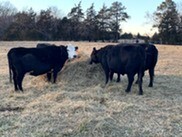 The U.S. Department of Agriculture's (USDA) Risk Management Agency (RMA) approved changes to improve insurance coverage for American livestock producers. These updates will take effect for the Livestock Risk Protection (LRP), Livestock Gross Margin (LGM), and Dairy Revenue Protection (DRP) insurance programs beginning with the 2026 crop year.
Livestock Risk Protection
LRP provides protection for livestock producers looking to insure against declining market prices. This program offers coverage levels ranging from 70% to 100% of the "expected ending values" (expected price at the end of the insurance period).
The changes to LRP include:
•Modifying the termination date to Sept. 30 and the premium billing date to the first day of the second month after the end date of endorsement.
•Adding two new types of LRP coverage:
•Feeder Cattle - Unborn Calves will provide coverage for beef or beef/dairy cross calves sold within two weeks after birth.
•Fed Cattle - Cull Cows will provide coverage for dairy cull cows with a coverage limitation of 13 weeks.
•Allowing coverage based on a forward contract or purchase agreement.
•Additional record requirement includes a copy of the purchase agreement and proof of delivery.
•Adding drought exemption for Feeder Cattle that will be based on the Drought Monitor's Drought Severity and Coverage Index (DSCI).
•Adding additional record requirements for Feeder Cattle:
•Applicable when livestock are purchased and not marketed within 60 days of the end date.
•The sex of the feeder cattle must be verified in the marketing or purchase records.
Livestock Gross Margin
LGM provides protection to cattle, dairy and swine producers against unexpected decreases in gross margin (market value of livestock or milk minus input costs). The program calculates the expected gross margin for a period using future market prices and pays an indemnity to the extent that the actual gross margin is less than the expected gross margin.
The changes to LGM include:
•Modifying the termination date to Aug. 31 and the premium billing date to the first day of the second month after the Specific Coverage Endorsement ended.
Dairy Revenue Protection
For dairy producers, DRP provides protection against a decline in revenue (yield and/or price) on the milk produced from dairy cows on a quarterly basis. The expected revenue is based on futures prices for milk and dairy commodities, and the amount of covered milk production elected by the dairy producer.
The changes to DRP include:
•Modifying the DRP termination date to Jan. 31 and the premium billing date to the first day of the third month after the end date of endorsement.
•Modifying the program to give additional flexibilities to producers impacted by an animal disease when they have suffered an eligible loss.
•RMA is increasing the minimum declarable butterfat test to 4.00 pounds, increasing maximum declarable butterfat test to 6.00 pounds and increasing minimum declarable protein test to 3.20 pounds.
More Information
LRP, LGM and DRP are available to livestock producers in all states and counties. Crop insurance is sold and delivered solely through private crop insurance agents. A list of crop insurance agents is available online at the RMA Agent Locator. Producers can learn more about crop insurance and the modern farm safety net at rma.usda.gov or by contacting their RMA Regional Office. RMA's Basics for Beginners provides information for those new to crop insurance.
| Farm loan borrowers who have pledged real estate as security for their Farm Service Agency (FSA) direct or guaranteed loans are responsible for maintaining loan collateral. Borrowers must obtain prior consent or approval from FSA or the guaranteed lender for any transaction that affects real estate security. These transactions include, but are not limited to:
•Leases of any kind
•Easements of any kind
•Subordinations
•Partial releases
•Sales Failure to meet or follow the requirements in the loan agreement, promissory note, and other security instruments could lead to nonmonetary default which could jeopardize your current and future loans.
It is critical that borrowers keep an open line of communication with their FSA loan staff or guaranteed lender when it comes to changes in their operation. For more information on borrower responsibilities, read Your FSA Farm Loan Compass. Top of page  | | A key part of NRCS's 90-year history was the establishment of the conservation planning process by
Hugh Hammond Bennett. Bennett was the agency's first chief and is considered the "father of soil
conservation." He believed in considering each farm's unique conditions when developing a
conservation plan. A conservation plan is a document outlining the strategies and actions that should be taken to
protect and manage natural resources on a specific area of land. It serves as a blueprint for
achieving conservation goals. To develop a conservation plan, a conservation planner and the
customer (farmer, rancher or landowner) collaborate during the conservation planning process. Bennett believed that agency employees must walk the land with the customer and see their natural
resource challenges and opportunities firsthand. Bennett also understood that natural resource
concerns could not be treated in isolation; soil, water, air, plants, animals, and humans are all
part of an integrated system that is inter-dependent.
Learn more about how conservation planning has evolved over the years. | Top of page White/Van Buren/Putnam County USDA Service Center 749 Millers Point Road Sparta, TN 38583 Phone: 931-738-7822 ext. 2 Fax:855-539-6301 | | Office Hours: Monday - Friday 8:00 a.m. - 4:30 p.m. | | FSA Office Farm Programs Chad Huddleston, CED chad.huddleston@usda.gov Lori Grissom, PA lori.grissom@usda.gov FSA Farm Loans Farm Loan Manager: Holly Harper 615-735-9880 holly.harper@usda.gov | White-Van Buren-Putnam NRCS Offices White County NRCS Office: Benjamin Wilson, Acting DC 931-738-7822, ext. 3 benjamin.wilson3@usda.gov Van Buren County NRCS Office: Daniel Owens, SC 931-946-2614 daniel.c.owens@tn.nacdnet.net Putnam County NRCS Office Robert Halfacre, DC
931-528-6472, ext. 3
robert.halfacre@usda.gov | | FSA County Committee: Douglas Fowler, Chairperson Douglas Dodson, Vice-Chairperson Dorothy Clark, Member/Advisor
Steve Slatten, Member
Gary Bush, Member | Next scheduled FSA County Committee Meeting: January 13, 2026 @ 8:30 a.m. at 749 Millers Point Road, Sparta, TN. 38583 (Meeting dates are subject to change) | |







Comments