 Kanawha-Putnam Service Center Updates - December 30, 2025 To all farmers and ranchers in Kanawha and Putnam Counties, we wish you a safe and joyous New Year! Producers who farm LAA's 2 and 5 should expect to see ballots in the mail for the upcoming County Committee Election. Please return these ballots to the office prior the February 2nd deadline to ensure your vote is counted. To reach our FSA office, call 304-776-5256 extension 2 for any questions you may have regarding these ballots. In This Issue:  FSA and NRCS program applicants for benefits are required to submit a completed CCC-902 Farming Operation Plan and CCC-941 Average Gross Income (AGI) Certification and Consent to Disclosure of Tax Information for FSA to determine the applicant's payment eligibility and establish the maximum payment limitation applicable to the program applicant. Participants are not required to annually submit new CCC-902s for payment eligibility and payment limitation purposes unless a change in the farming operation occurs that may affect the previous determination of record. A valid CCC-902 filed by the participant is considered to be a continuous certification used for all payment eligibility and payment limitation determinations applicable for the program benefits requested. Participants are responsible for ensuring that all CCC-902 and CCC-941 and related forms on file in the county office are updated, current, and correct. Participants are required to timely notify the county office of any changes in the farming operation that may affect the previous determination of record by filing a new or updated CCC-902 as applicable. Changes that may require a new determination include, but are not limited to, a change of: - Shares of a contract, which may reflect:
-
- A land lease from cash rent to share rent
- A land lease from share rent to cash rent (subject to the cash rent tenant rule
- A modification of a variable/fixed bushel-rent arrangement
- The size of the producer's farming operation by the addition or reduction of cropland that may affect the application of a cropland factor
- The structure of the farming operation, including any change to a member's share
- The contribution of farm inputs of capital, land, equipment, active personal labor, and/or active personal management
- Farming interests not previously disclosed on CCC-902 including the farming interests of a spouse or minor child
- Certifications of average AGI are required to be filed annually for participation in an annual USDA program. For multi-year conservation contracts and NRCS easements, a certification of AGI must be filed prior to approval of the contract or easement and is applicable for the duration of the contract period.
Participants are encouraged to file or review these forms within the deadlines established for each applicable program for which program benefits are being requested. | 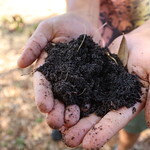 Mulching is one of the most accessible and effective conservation practices available to small-scale and urban farmers. Fundamentally, mulching involves covering the soil surface with a protective layer of organic or inorganic material. This layer can be made up of natural materials such as straw, wood chips, shredded leaves or cover crop residue as well as synthetic materials like plastic mulch or landscape fabric. While it may seem like a modest step in farm management, mulching with organic materials has powerful implications for soil health, crop productivity, water conservation and weed suppression, making it a key practice in sustainable farming systems. For farmers working in smaller or urban spaces, where soil quality may already be compromised due to previous development, compaction or limited access to soil amendments, mulching can offer immediate and long-lasting benefits. One of the most significant advantages is the decrease in soil temperature fluctuations and retention of moisture. Mulch acts as a protective blanket over the soil, reducing heat from the sun's rays and water loss from evaporation while promoting maximum root growth. In cooler months, dark colored mulch can warm the soil and promote spring crop germination or help insulate young transplants from frost. Mulching also plays a critical role in weed suppression. By blocking sunlight from reaching the soil surface, mulch helps prevent the germination and growth of unwanted plants. This can dramatically cut down on the labor and time small-scale farmers must dedicate to weeding, allowing them to focus on other aspects of their land. Urban soils are often low in organic matter and biological diversity, which can limit crop yields and soil resilience. Organic mulches break down over time, gradually contributing to soil organic matter and enhancing soil structure, microbial activity and nutrient cycling. This function supports the development of a healthy soil ecosystem by providing habitat and food for beneficial organisms like earthworms and microorganisms. These soil lifeforms play a crucial role in breaking down additional organic matter, improving nutrient availability and enhancing overall soil fertility. As such, mulching becomes more than just a surface treatment, it becomes an integral part of soil regeneration. Erosion control is another important function of mulch. In areas with limited vegetative cover or sloped terrain, precipitation can quickly wash way topsoil, carrying nutrients with it. A well-applied layer of mulch protects the soil from the impact of raindrops and reduces runoff, helping to maintain the integrity of the land and the productivity of the garden or farm plot. The USDA's Natural Resources Conservation Service (NRCS) recognizes mulching as a key conservation practice and offers technical assistance to help farmers implement it effectively. Through programs like the Environmental Quality Incentives Program (EQIP), eligible small-scale and urban producers may also qualify for financial assistance to support the use of natural mulch material (synthetic materials are not covered under EQIP) and complimentary conservation activities like cover crops and reduced tillage. Local NRCS field offices can work with producers to develop a conservation plan tailored to their specific needs, ensuring that mulching and other practices are applied in a way that maximizes their benefits. In short, mulching is a simple, high impact tool for building healthy, productive soils in small-scale and urban farm settings. With support from NRCS, even the smallest growers can apply this practice to grow food while increasing resiliency on their farm. | Top of page USDA's Risk Management Agency (RMA) announced it is implementing the Quality Loss (QL) option for additional crop insurance programs for the 2026 and succeeding crop years. QL will be available for the alfalfa seed, dry peas, dry beans, grass seed and triticale crop insurance programs. RMA developed the QL option in response to the 2018 Farm Bill requirement to carry out research and development for an alternative method for adjusting quality losses that will not impact Actual Production History (APH). While initially created to improve coverage options for row crop producers, the option was expanded to perennial crop programs in the 2024 crop year. Producers must elect QL by the sales closing date. The QL option may apply if a notice of loss is filed, regardless of whether an indemnity is received for that crop year. When elected, QL allows a producer to replace the post-quality adjusted production in their APH database with the pre-quality adjusted production, thereby increasing the actual yields for individual crop years. Quality adjustment to production will be based on the applicable quality statements contained in the Special Provisions, or on applicable quality requirements allowed by the Crop Provisions or endorsements. The QL option is not available for policies insured under the Catastrophic Risk Protection Endorsement. Contact a crop insurance agent to see how Federal Crop Insurance can meet the specific needs of your operation. Crop insurance is sold and delivered solely through private crop insurance agents. A list of crop insurance agents is available online at the RMA Agent Locator. Producers can learn more about crop insurance and the modern farm safety net at rma.usda.gov or by contacting their RMA Regional Office. RMA's Basics for Beginners provides information for those new to crop insurance.  The U.S. Department of Agriculture (USDA) is announcing the launch of the Debt Consolidation Tool, an innovative online tool available through farmers.gov that allows agricultural producers to enter their farm operating debt and evaluate the potential savings that might be provided by obtaining a debt consolidation loan with USDA's Farm Service Agency (FSA) or a local lender. A debt consolidation loan is a new loan used to pay off other existing operating loans or lines of credit that might have unreasonable rates and terms. By combining multiple eligible debts into a single, larger loan, borrowers may obtain more favorable payment terms such as a lower interest rate or lower payments. Consolidating debt may also provide farmers and ranchers additional cash flow flexibilities. The Debt Consolidation Tool is a significant addition to FSA's suite of improvements designed to modernize its Farm Loan Programs. The tool enhances customer service and increases opportunities for farmers and ranchers to achieve financial viability by helping them identify potential savings that could be reinvested in their farming and ranching operation, retirement accounts, or college savings accounts. Producers can access the Debt Consolidation Tool by visiting farmers.gov/debt-consolidation-tool. The tool is built to run on modern browsers including Chrome, Edge, Firefox, or the Safari browser. Producers do not need to create a farmers.gov account or access the authenticated customer portal to use the tool. USDA encourages producers to reach out to their local FSA farm loan staff to ensure they fully understand the wide range of loan and servicing options available to assist with starting, expanding, or maintaining their agricultural operation. To conduct business with FSA, please contact your local USDA Service Center. | Top of page |







Comments