 Gregory County USDA Newsletter - December 31, 2025 In This Issue: 12/31/2025 - Deadline to purchase NAP Coverage on Honey
01/01/2026 - USDA Service Center closed for New Year's Day
01/19/2026 - USDA Service Center closed for Martin Luther King Jr Day
01/31/2026 - Deadline to apply for 2025 Wool, Mohair & Pelts LDP
02/02/2026 - County Committee Election Deadline
03/02/2026 - Deadline to apply for 2025 LIP/ELAP
04/30/2026 - Deadline to apply for 2023 & 2024 SDRP (Stage 1 and 2) Farm Program Interest Rates for December:
Commodity (Grain) Loans - 4.625% FSFL, 3 year - 3.500%
FSFL, 5 year - 3.625%
FSFL, 7 year - 3.875%
FSFL, 10 year - 4.125%
FSFL, 12 year - 4.250% Farm Loan Program Interest Rates for December: Farm Operating Loans, Direct - 4.625%
Farm Ownership Loans, Direct - 5.750%
Farm Ownership, Joint Financing - 3.750%
Farm Ownership Loans, Down Payment - 1.750% Lesli Heyden, County Executive Director - lesli.heyden@usda.gov Tammi Serr, Program Analyst -tammi.serr@usda.gov - Acreage Reporting, Farm Records, Emergency Assistance for Livestock, Honeybees and Farm-Raised Fish (ELAP), New Breakings/Wetland Determinations. Hannah Higgins, Program Analyst - hannah.higgins@usda.gov - Non-Insured Crop Disaster Program (NAP), Agricultural Risk Coverage/Price Loss Coverage Program (ARC/PLC), Farm Storage Facility Program (FSFL), Marketing Assistance Loans, Loan Deficiency Program Wanda Smith, Program Analyst - wanda.smith2@usda.gov - Conservation Programs, Livestock Disaster Programs, Payment Limitation/Payment Eligibility. Office Email - sdburke-fsa@usda.gov For more program information, visit farmers.gov. Stay informed: Sign up for text messages - text SDGregory to 372-669 Top of page USDA's Farm Service Agency (FSA) is delivering more than $16 billion in total Congressionally approved disaster relief. FSA is now accepting applications for assistance through the second stage of the Supplemental Disaster Relief Program (SDRP) from agricultural producers who suffered eligible non-indemnified, uncovered or quality crop losses due to qualifying natural disasters in 2023 and 2024. Stage Two covers eligible crop, tree, bush and vine losses that were not covered under Stage One program provisions, including non-indemnified (shallow loss), uncovered and quality losses. Although the majority of payments from the first stage are already in the hands of producers helping them prepare for and invest in the next crop year, Stage One assistance, announced in July, remains available to producers who received an indemnity under crop insurance or the Noninsured Crop Disaster Assistance Program (NAP) for eligible crop losses due to qualifying 2023 and 2024natural disaster events. The deadline to apply for both Stage One and Stage Two assistance is April 30, 2026. Additionally, FSA is taking applications for assistance from producers who had to dump or remove milk from the commercial market and who incurred losses of eligible farm stored commodities due to qualifying disaster events in 2023 and 2024. SDRP Stage Two Program Details SDRP Stage Two provides assistance for eligible crop, tree, bush and vine losses not covered under Stage One, including: - Non-Indemnified Losses (Including Shallow Losses)
- Insured losses through federal crop insurance that did not trigger a crop insurance indemnity.
- Losses with NAP coverage that did not trigger a NAP payment.
- Uncovered Losses (Uninsured Losses)
- Includes losses that were not insured through federal crop insurance or NAP.
- Quality Losses
- Includes quality losses to commodities indicated by:
- A decrease in value based on discounts due to the physical condition of the crop supported by applicable grading factors
- A decline in the nutritional value of forage crops supported by documented forage tests.
- Producers will certify to an SDRP quality loss percentage.
FSA is establishing block grants with Connecticut, Hawaii, Maine, and Massachusetts that cover crop losses; therefore, producers with losses on land physically located in these states are not eligible for SDRP program payments. For information on program eligibility and to download an application checklist, visit fsa.usda.gov/sdrp. More information will be provided in early 2026 regarding a separate enrollment period for quality losses covered by SDRP Stage One as well as for insured producers in Puerto Rico who were not included in Stage One because data was not available when pre-filled applications were mailed. Milk and On-Farm Stored Crop Loss Assistance The Milk Loss Program provides up to $1.65 million in payments to eligible dairy operations for milk that was dumped or removed without compensation from the commercial milk market because of a qualifying natural disaster event in 2023 and/or 2024. Producers who suffered losses of eligible harvested commodities while stored in on-farm structures in 2023 and/or 2024 due to a qualifying natural disaster event may be eligible for assistance through the On-Farm Stored Commodity Loss Program, which provides for up to $5 million to impacted producers. The deadline to apply for milk and on-farm stored commodity losses is Jan. 23, 2026. Information and reference resources for both programs are available online at Information and fact sheets for both programs are available online at fsa.usda.gov/mlp for milk loss and fsa.usda.gov/ofsclp for on-farm stored commodity losses. To make an appointment to apply, contact the Gregory County FSA Office at 605-775-9122. 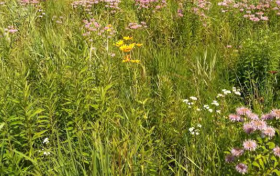 The Conservation Reserve Program (CRP) is a program administered by the Farm Service Agency (FSA) to conserve farmland for future generations while providing habitat for wildlife, reducing soil erosion, and improving water quality. Regular maintenance on CRP acres is needed to ensure the acreage continues to provide conservation benefits and remains in compliance with the CRP contract. Regular Maintenance Producers with CRP contracts are required to control all weeds, insects, pests, and other undesirable species to the extent necessary to ensure that the approved conservation cover is adequately protected and to ensure there is no adverse impact on surrounding land. Mowing is one of the allowable practices for weed control, but mowing for aesthetic purposes is never permitted. The Conservation Plan states the required weed control methods for each site. Once a stand has been certified as fully established, participants are required to maintain plant diversity and stand density according to the Conservation Plan and offer (CRP-2) for the life of the contract. Stands that do not meet practice specific plant diversity or density requirements may be considered non-compliant. Refer to your conservation plan or contact FSA if you have any questions or concerns about the vegetative cover requirements. Maintenance activities cannot occur during the primary nesting season for birds without written prior approval from the local county office. The primary nesting season in South Dakota is May 1 through August 1. Mid-Contract Management Regular maintenance for weed and pest control is separate from the Mid-Contract Management (MCM) requirement. MCM ensures plant diversity and wildlife benefits while ensuring protection of the soil and water resources. Such activities are site-specific and are for the purpose of enhancing the approved cover. MCM must be completed between years four and six of a 10-year contract and between years seven and nine of a 15-year contract. The Conservation Plan will state what year MCM must take place. Noncompliance with Maintenance Requirements Failure to adequately maintain the stand may result in noncompliance with the terms and conditions of the CRP contract. Noncompliance can result in adverse actions up to and including termination of the CRP contract. Contracts that are out of compliance are ineligible to re-enroll, unless the stand is brought back into compliance prior to the enrollment deadline. For general information about CRP, visit the Conservation Reserve Program webpage. For information about specific contracts, reach out to the local FSA office. | Are you interested in working with USDA to start or grow your farm, ranch, or private forest operation, but don't know where to start? Whether you're looking to access capital or disaster assistance through USDA's Farm Service Agency (FSA) or address natural resource concerns on your land with assistance from USDA's Natural Resources Conservation Service (NRCS), a great place to start is farmers.gov. Farmers.gov is a one-stop shop for information about the assistance available from FSA and NRCS. The site also offers many easy-to-use tools for farmers, ranchers, and private forestland owners, whether you are reaching out for the first time or are a long-term customer with a years-long relationship with USDA. With a farmers.gov account you can: - Complete an AD-2047, Customer Data Worksheet, prior to your first meeting with FSA and NRCS.
- View farm loan payments history from FSA.
- View cost share assistance received and anticipated from NRCS conservation programs.
- Request conservation assistance from NRCS as well as view and track your conservation plans, practices, and contracts.
- View, print, and export detailed farm records and farm/tract maps for the current year, which are particularly useful when fulfilling acreage reporting requirements.
- Print FSA-156 EZ, Abbreviated Farm Record and your Producer Farm Data Report for the current year.
- Pay FSA debt using the "Make an FSA Payment" feature
- Apply for a farm loan online, view information on your existing loans, and make USDA direct farm loan payments using the Pay My Loan feature.
Learn how to create a farmers.gov account today! The U.S. Department of Agriculture (USDA) Farm Service Agency (FSA) reminds foreign investors with an interest in agricultural land in the United States that they are required to report their land holdings and transactions to USDA. The Agricultural Foreign Investment Disclosure Act (AFIDA) requires foreign investors who buy, sell or hold an interest in U.S. agricultural land to report their holdings and transactions to the USDA. Foreign investors must file AFIDA Report Form FSA-153 with the FSA county office in the county where the land is located. Large or complex filings may be handled by AFIDA headquarters staff in Washington, D.C. According to CFR Title 7 Part 781, any foreign person who holds an interest in U.S. agricultural land is required to report their holdings no later than 90 days after the date of the transaction. Foreign investors should report holdings of agricultural land totaling 10 acres or more used for farming, ranching or timber production, and leaseholds on agricultural land of 10 or more years. Tracts totaling 10 acres or less in the aggregate, and which produce annual gross receipts in excess of $1,000 from the sale of farm, ranch, forestry or timber products, must also be reported. AFIDA reports are also required when there are changes in land use, such as from agricultural to nonagricultural use. Foreign investors must also file a report when there is a change in the status of ownership. The information from AFIDA reports is used to prepare an annual report to Congress. These annual reports to Congress, as well as more information, are available on the FSA AFIDA webpage. Assistance in completing the FSA-153 report may be obtained from the local FSA office. For more information regarding AFIDA or FSA programs, contact the Gregory County FSA office at phone #605-775-9122 or visit farmers.gov. | 






Comments