 Happy New Year from USDA - December 30, 2025 In This Issue:  USDA's Farm Service Agency (FSA) is delivering more than $16 billion in total Congressionally approved disaster relief. FSA is now accepting applications for assistance through the second stage of the Supplemental Disaster Relief Program (SDRP) from agricultural producers who suffered eligible non-indemnified, uncovered or quality crop losses due to qualifying natural disasters in 2023 and 2024. Stage Two covers eligible crop, tree, bush and vine losses that were not covered under Stage One program provisions, including non-indemnified (shallow loss), uncovered and quality losses. Although the majority of payments from the first stage are already in the hands of producers helping them prepare for and invest in the next crop year, Stage One assistance, announced in July, remains available to producers who received an indemnity under crop insurance or the Noninsured Crop Disaster Assistance Program (NAP) for eligible crop losses due to qualifying 2023 and 2024natural disaster events. The deadline to apply for both Stage One and Stage Two assistance is April 30, 2026. SDRP Stage Two Program Details SDRP Stage Two provides assistance for eligible crop, tree, bush and vine losses not covered under Stage One, including: - Non-Indemnified Losses (Including Shallow Losses)
o Insured losses through federal crop insurance that did not trigger a crop insurance indemnity. o Losses with NAP coverage that did not trigger a NAP payment. - Uncovered Losses (Uninsured Losses)
o Includes losses that were not insured through federal crop insurance or NAP. o Includes quality losses to commodities indicated by: - A decrease in value based on discounts due to the physical condition of the crop supported by applicable grading factors
- A decline in the nutritional value of forage crops supported by documented forage tests.
o Producers will certify to an SDRP quality loss percentage. For information on program eligibility and to download an application checklist, visit fsa.usda.gov/sdrp. More information will be provided in early 2026 regarding a separate enrollment period for quality losses covered by SDRP Stage One. To make an appointment to apply, call the Fond du Lac County Farm Service Agency at 920-923-3033 or email fsa.fonddulac@usda.gov | Top of page  Your local Farm Loan team is already working on operating loans for spring 2026 and asks potential borrowers to submit their requests early so they can be timely processed. The farm loan team can help determine which loan programs are best for applicants. FSA offers a wide range of low-interest loans that can meet the financial needs of any farm operation for just about any purpose. The traditional farm operating and farm ownership loans can help large and small farm operations take advantage of early purchasing discounts for spring inputs as well expenses throughout the year. Microloans are a simplified loan program that will provide up to $50,000 for both Farm Ownership and Operating Microloans to eligible applicants. These loans, targeted for smaller and non-traditional operations, can be used for operating expenses, starting a new operation, purchasing equipment, and other needs associated with a farming operation. Loans to beginning farmers and members of underserved groups are a priority. Other types of loans available include: Marketing Assistance Loans allow producers to use eligible commodities as loan collateral and obtain a 9-month loan while the crop is in storage. These loans provide cash flow to the producer and allow them to market the crop when prices may be more advantageous. Farm Storage Facility Loans can be used to build permanent structures used to store eligible commodities, for storage and handling trucks, or portable or permanent handling equipment. A variety of structures are eligible under this loan, including bunker silos, grain bins, hay storage structures, and refrigerated structures for vegetables and fruit. A producer may borrow up to $500,000 per loan.
To learn more about the FSA farm loan programs, please contact the Fond du Lac Farm Loan Team at 920-923-3033 or visit www.fsa.usda.gov/resources/farm-loan-programs. | Join NRCS Chief Aubrey J.D. Bettencourt as she "Dishes the Dirt" on the U.S. Capitol Christmas tree, "Silver Belle" with Forest Service Chief Tom Schultz. For the past 55 years, a tree from American public lands is harvested and transported to the U.S. Capitol – this year, the tree traveled 3,000-miles from the Humboldt-Toiyabe National Forest in Nevada. As an advocate for private forest owners and Christmas tree producers alike, NRCS is proud to be one of the sponsors of this year's Capitol Christmas tree. Tree farmers can access NRCS financial and technical assistance through the Environmental Quality Incentives Program and Conservation Stewardship Program to implement a number of practices to improve the economic and environmental resilience of their operation. Watch the video. Top of page 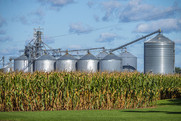 | | USDA's Farm Service Agency (FSA) celebrated 25 years of the agency's popular Farm Storage Facility Loan Program (FSFL) this year. For a quarter century, family-owned agricultural operations have received low-interest financing through the program to enhance or expand their operations and manage marketing of the commodities they produce by building or upgrading permanent and portable storage facilities and purchasing needed handling equipment. The FSFL program was created in May 2000 to address existing on-farm grain storage needs. Since the program's inception, more than 40,000 loans have been issued for on-farm storage, increasing storage capacity by one billion bushels. While many producers primarily associate the program with grain storage, over the past 25 years the eligible storage has expanded to include a wide variety of facilities and related equipment - new or used and permanent or portable - including hay barns, bulk tanks, and facilities for cold storage. Drying, handling and storage equipment is also eligible, including skid steers and storage and handling trucks. Eligibility Eligible commodities for storage loans include grains, oilseeds, peanuts, pulse crops, hay, hemp, honey, renewable biomass commodities, fruits and vegetables, floriculture, hops, seed cotton, wool, maple sap, maple syrup, milk, cheese, yogurt, butter, eggs, unprocessed meat and poultry, rye and aquaculture. Most recently, controlled atmosphere storage was added as an eligible facility and bison meat has been also added to the list of eligible commodities. FSFL is an excellent financing program to address on-farm storage and handling needs for small and mid-sized farms, and for new farmers. Loan terms vary from three to 12 years. The maximum loan amount for storage facilities is $500,000. The maximum loan amount for storage and handling trucks is $100,000. In 2016, FSA introduced a new storage loan category, the microloan, for loans with an aggregate balance up to $50,000. Microloans offer a 5% down payment requirement, compared to a 15% down payment for a regular FSFL, and microloans waive the regular three-year production history requirement. How to apply Loan applications should be filed in the administrative FSA county office that maintains a producer's farm records. Producers can contact their FSA County Office to make an appointment. Beginning farmers who haven't worked with FSA can visit farmers.gov/your-business/beginning-farmers for more information or view the New Farmers Fact Sheet. For more information, visit the FSFL webpage, view the fact sheet and our Ask the Expert Blog, or contact your FSA County Office. | The U.S. Department of Agriculture's Risk Management Agency (RMA) made significant enhancements to federal crop insurance programs by expanding benefits for beginning farmers and ranchers, increasing coverage options, and making crop insurance more affordable and accessible across multiple insurance programs. Putting American Farmers First with Enhanced Support for Beginning Farmers and Ranchers Beginning farmers and ranchers will receive substantially increased premium support during their first decade of farming operations, making crop insurance more affordable for the next generation of American agricultural producers. The enhanced benefits mean beginning farmers and ranchers will now receive: · 15 percentage points additional subsidy for the first two crop years · 13 percentage points for the third crop year · 11 percentage points for the fourth crop year · 10 percentage points for years five through ten These benefits build upon existing support that waives administrative fees and provides base premium subsidies. A beginning farmer or rancher is now defined as an individual who has not actively operated and managed a farm or ranch for more than 10 crop years. Making Crop Insurance More Accessible with Expanded Coverage Options Improvements to area-based crop insurance programs include: · Whole Farm Revenue Protection (WFRP) maximum coverage level increase from 85% to 90%, providing producers with enhanced protection for diversified operations. · Supplemental Coverage Option (SCO) premium support increase from 65% to 80%, making this valuable gap coverage more affordable. Additionally, producers can now purchase SCO regardless of their Area Risk Coverage (ARC) elections with the Farm Service Agency, dramatically increasing accessibility. · Enhanced Coverage Option (ECO) and similar programs including Margin Coverage Option (MCO), Hurricane Insurance Protection Wind Index (HIP-WI), and Fire Insurance Protection Smoke Index (FIP-SI) will also receive the increased 80% in premium support, making comprehensive coverage more affordable than ever. · SCO coverage will also expand to a coverage level of 90% (from 86%). Producers will have access to this option in 2026 via the ECO product, which has identical coverage at the same cost and premium support levels. USDA will then change the SCO policy for the 2027 crop year. These changes will be effective for all crops with sales closing dates on or after July 1, 2025. RMA will provide additional guidance on other provisions within the One Big Beautiful Bill Act as implementation details are finalized. Producers should contact their local crop insurance agent or visit the RMA website for more information about how these changes may affect their coverage options. Top of page |







Comments