The Due Diligence Test That Decides Whether Your Funding Actually LandsThe VC due diligence checks that expose ARR gaps, cap table errors, missing IP and customer churn and how to fix them before they cost you the round.*
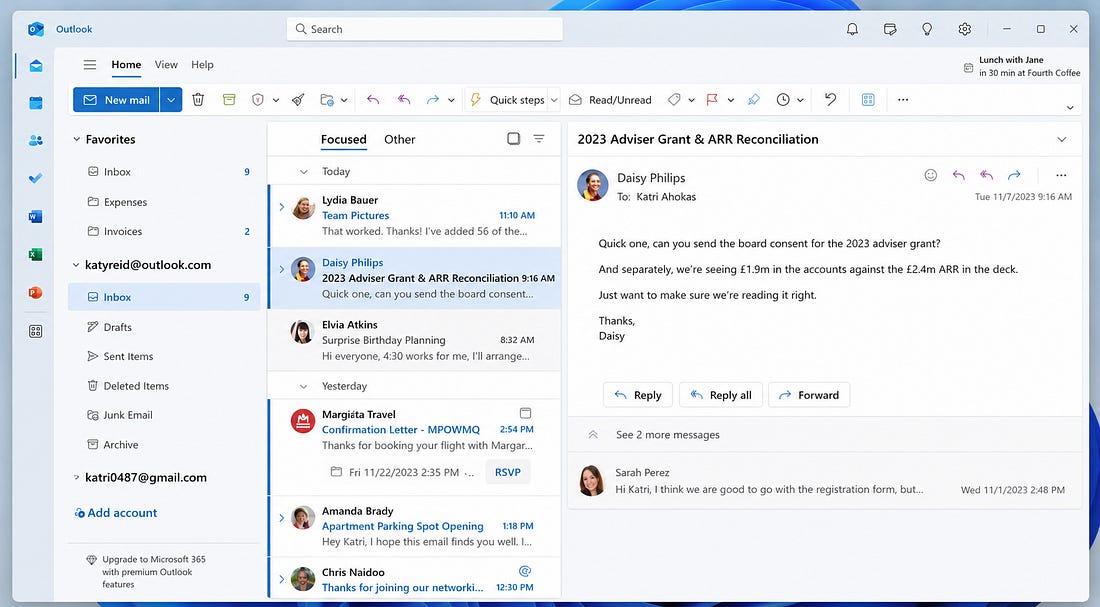
Week three of diligence. The associate emails at 6pm. “Quick one, can you send the board consent for the 2023 adviser grant? And separately, we’re seeing £1.9m in the accounts against the £2.4m ARR in the deck. Just want to make sure we’re reading it right.”
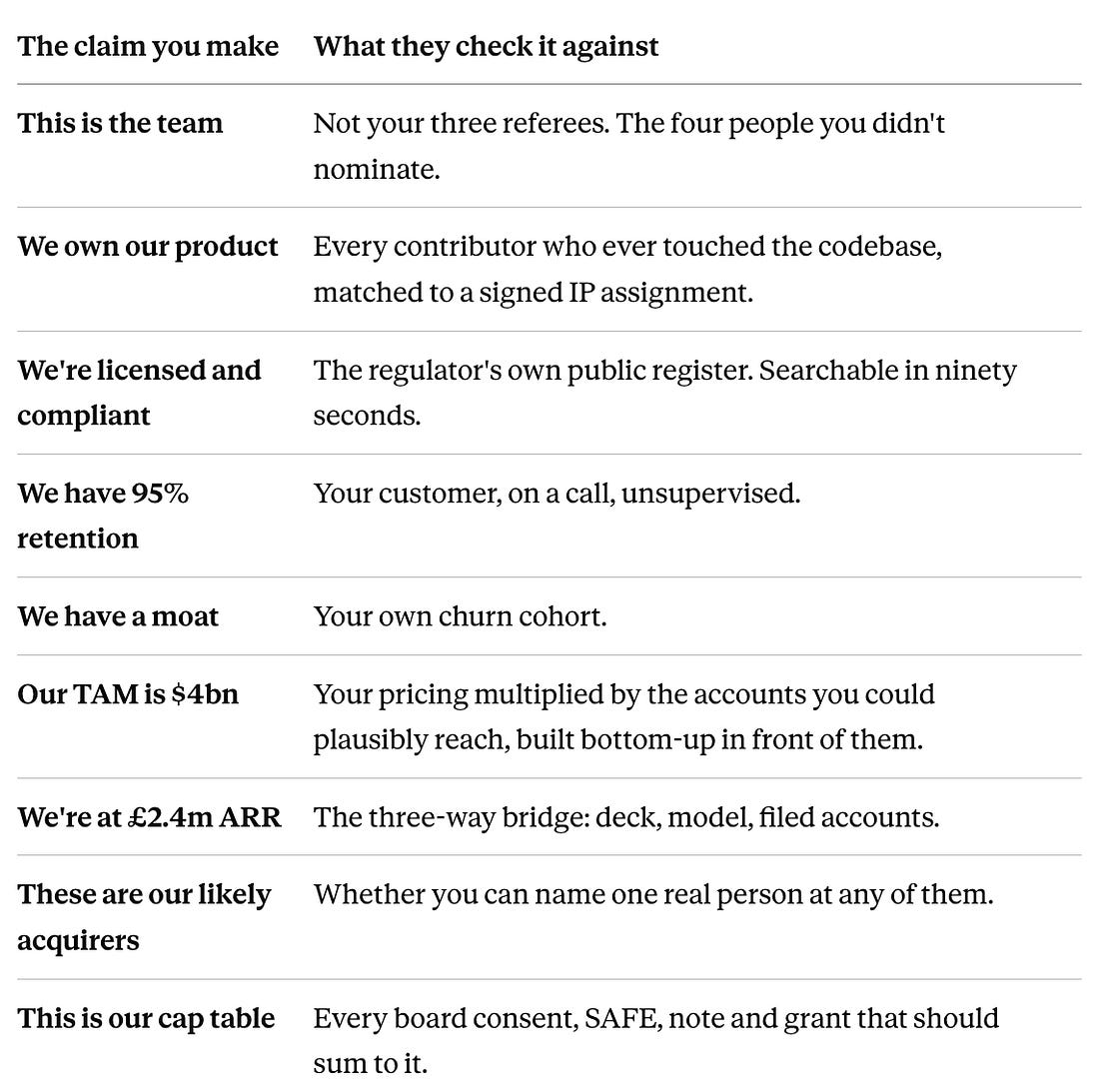
Both questions are polite. Neither is a request for a document. The first one means your cap table doesn’t tie to your consents and they already know it. The second means they have bridged your deck to your filed accounts, found a £500,000 gap, and are giving you one chance to explain it before it becomes the reason the price moves. This is what founders get wrong about diligence. They prepare a folder. They wait to be asked. They treat every request as an errand. But an investor who wanted your ARR figure already has it. It was on slide nine. The request exists because they have now read the same fact from a source you cannot edit, and they are checking whether the two versions match. Diligence is a reconciliation. Between 15% and 25% of signed term sheets never close, and almost none of those companies got worse in the interim. They just failed to agree with themselves. Here is what each request is actually comparing you against. Want to get in front of 250k+ founders and investors?For sponsorship opportunities across The Founders Corner newsletter and LinkedIn (160k followers), email: founderscornermedia@gmail.com The Nine Pairings
Read the right-hand column again. Not one of those sources belongs to you. That’s the entire design. Three of them do most of the damage, and they’re worth spelling out. The IP one is structural, not administrative. A contractor who wrote 30% of the product in 2022 and never signed an assignment means the company does not own what it is selling. Remediation is possible, but it hands that contractor leverage at the precise moment you have none. Founders routinely spend six weeks locating someone who has since moved country, and term sheets expire inside six weeks. The revenue bridge is where credibility dies. ARR in the deck, bookings in the model and recognised revenue in the accounts are three different measures, and every investor knows it. A gap is not read as a spreadsheet error. It is read as evidence that you present different numbers in different rooms, which is a character finding rather than a financial one. The reference call is unarguable. “We’re seeing 95% retention” against “we’re not renewing” is the most common late-stage killer in venture, and there is no rebuttal available to you after it lands. The One With No CureEverything above is fixable. It costs time, trust and negotiating position, but it’s fixable. The 83(b) election is not.
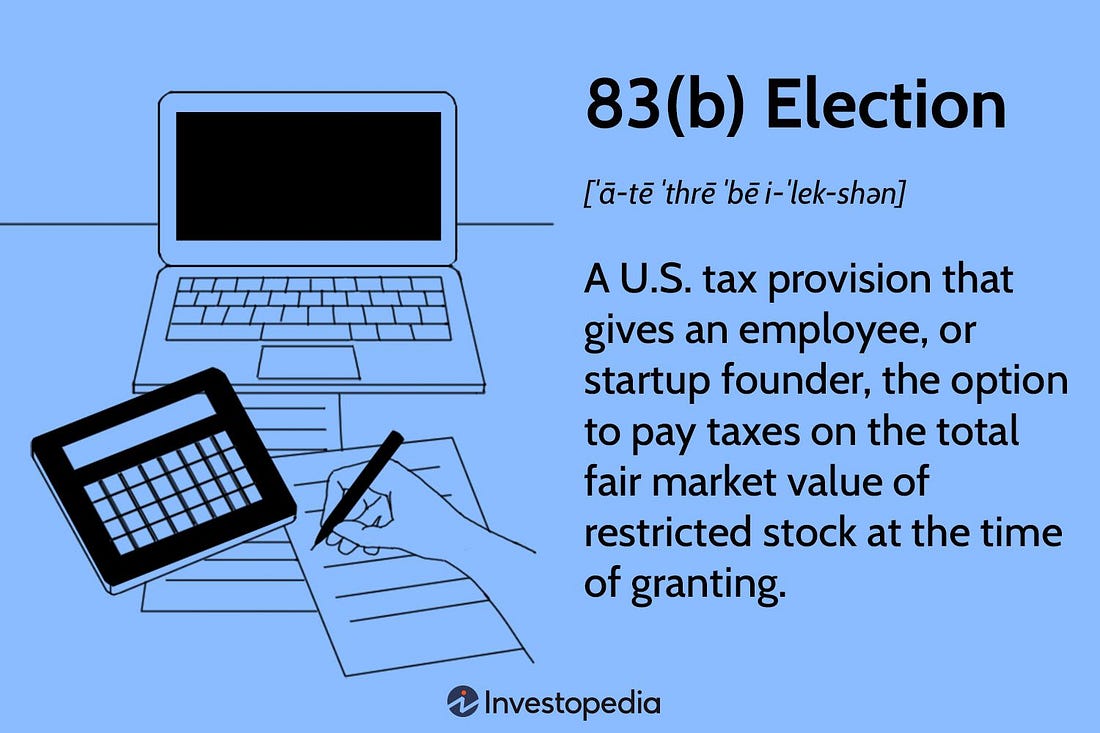
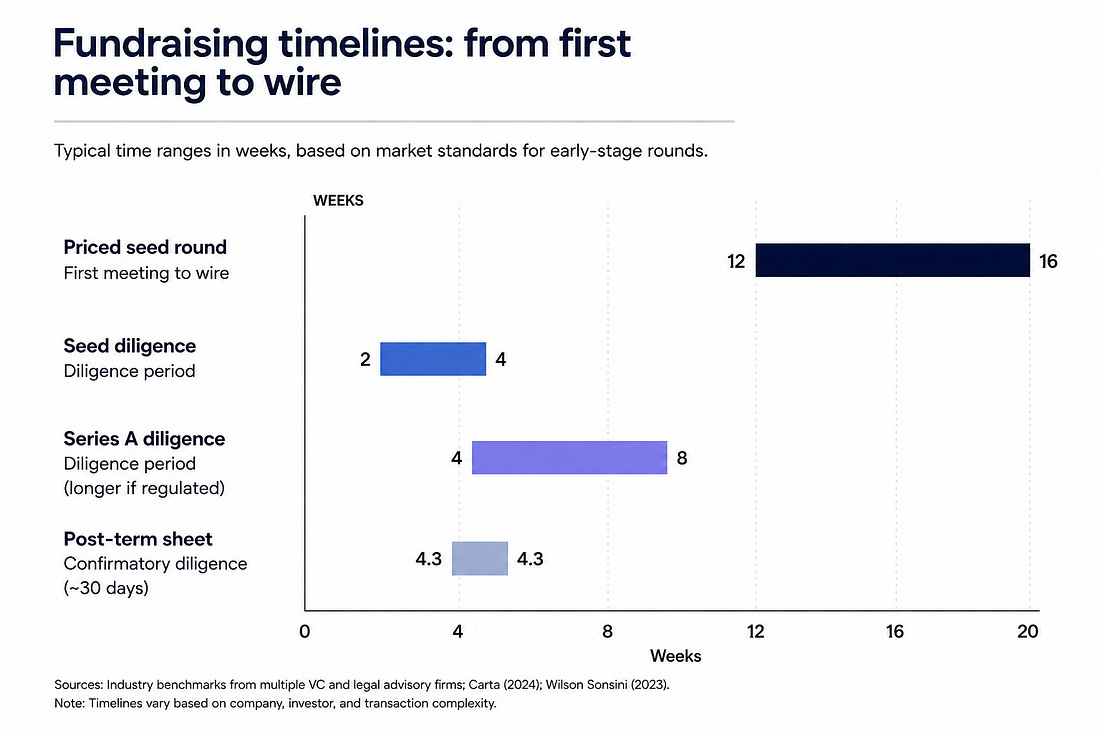
Thirty calendar days from the stock being transferred. No extensions, no relief, no late filing. The Tax Court has rejected every argument put to it, including illness, attorney error and postal failure. Three details cause most of the losses: The clock starts at transfer, not signature - usually the date the board approved the grant, not the day you signed papers or the day shares appeared in Carta. Founders count from the wrong date and lose the window without noticing. Filing with the IRS alone is invalid. A copy must also go to the issuing company. That’s a separate requirement, and written confirmation of receipt is what protects you years later. “My lawyer handled it” is not a defence. It’s a personal filing. Verify it exists. Since July 2025 there’s an electronic route via Form 15620 with immediate confirmation, now the sensible default. On paper, the certified mail receipt is your entire evidence base. Check this tonight rather than at your next raise. A missing election gets more expensive every time your valuation moves. Our Most-Read Articles Right Now🔥 The Data Room That Doesn’t Lose Deals at the Last Minute Where to put everything, once you know what you’re proving. 🔥 Your Data Room Is Killing Your Round. Six Prompts to Fix It The structural errors that make commercial diligence read badly from page one. 📈 The Claude Due Diligence Playbook That Gets You to Closing Run the analyst’s first pass on your own company while you can still fix what it finds. 📋 What a Cap Table Actually Is, and Why It Matters The document diligence opens first, explained properly. 📋 The Most Dangerous Document a Founder Will Ever Sign The term sheet clauses that matter more than valuation. 📈 The Way VCs Actually Calculate Your Valuation The quiet maths that settles your price before the meeting starts. The WindowEveryone says build a data room before you pitch. True, and insufficient, because a data room is somewhere to put documents and the failures above are disagreements between them. The arithmetic of the calendar: A priced seed round runs 12 to 16 weeks from first meeting to wire. Seed diligence takes two to four weeks; Series A runs four to eight, longer if you’re regulated. After the term sheet, you get roughly 30 days of confirmatory diligence.
That last month is when most founders exhale. It’s also when the deal still dies. The cost of being caught out splits in two. The legal cleanup - cap table, assignments, consents - runs $5,000 to $25,000, and that’s the small number. The expensive part is the schedule. A contractor who has emigrated takes weeks to trace. Term sheets lapse while you look. Leads walk and don’t return. The same work, run eight weeks before your first meeting, costs identical fees and none of the leverage. Inside the Workbook
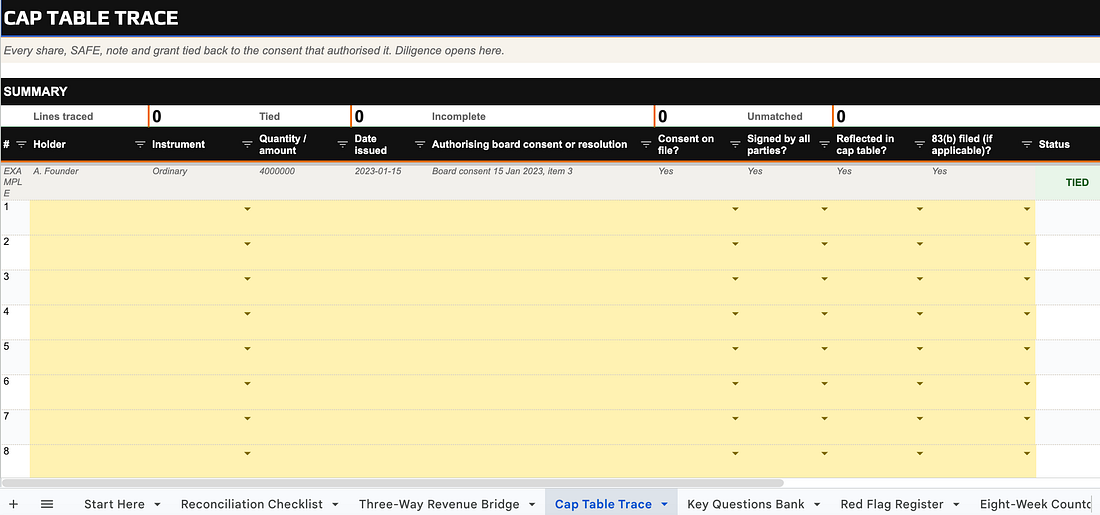
The download turns those nine pairings into something you can hand to a team and work through. It opens on a Reconciliation Checklist - each area with its claim, its second source, the document that proves it, an owner, a deadline and a status flag, colour-coded so a glance shows where you’re exposed. Beneath that sits the Key Questions bank, each request rewritten the way a partner actually asks it, so you hear the question before they ask it. Then the two that do the real work. The Three-Way Revenue Bridge puts deck ARR, model bookings and recognised revenue side by side and calculates the gap for you. The Cap Table Trace ties every share, SAFE, note and grant back to the board consent that authorised it, and flags whatever doesn’t match. There’s also a Red Flag Register of the answers that should worry you when they come back, and an eight-week countdown mapped backwards from your first meeting. Do These Five Things This WeekYou don’t need the workbook to start. You need ninety minutes and a willingness to find something you’d rather not. Confirm your 83(b). Ten minutes. The only item with no remedy. Bridge your ARR. Open the deck, the model and the accounts together. Write down the gap. If you can’t explain it in one sentence, an investor won’t either. Chase one signature. List everyone who has touched the product. Find the one name without an assignment on file. There is almost always one. Call a customer you’re about to cite. Ask what they’d say if an investor rang. Better to hear it now. Trace three lines of your cap table back to the consent that authorised them. If any don’t tie, assume the rest don’t either. Where two sources disagree, either fix it or become the person who raises it. A disclosed problem is a negotiation. A discovered one is a repricing. That’s the whole difference, and it costs you an afternoon. Download My Due Diligence Workbook 👇Everything above is yours: the nine pairings, the 83(b) trap with no cure, the timing that decides both. Act on that alone and you enter diligence ahead of most companies. Below the paywall is the part that does the work for you. ✅ The Reconciliation Checklist. All nine areas as live rows: the claim, the source they check it against, the document that proves it, an owner, a deadline. Colour-coded, so one glance shows where you are exposed and who is fixing it. ✅ The Three-Way Revenue Bridge. Find your ARR gap before your investor does. Deck against model against accounts, difference calculated, reconciling lines itemised. Twenty minutes to rule out the most common cause of late collapse. ✅ The Cap Table Trace. Every share, SAFE, note and grant tied back to the consent that authorised it, with anything unmatched flagged. This is where diligence opens. It should be where you open too. ✅ The Key Questions Bank. All nine requests written the way a partner actually asks them, plus the follow-up when your first answer sounds thin. Hear the question before they ask it. ✅ The Red Flag Register. The answers that should worry you when they come back. Know which reference call went badly before your lead does. ✅ The Eight-Week Countdown. The whole thing sequenced backwards from your first meeting, so the work lands while it is still cheap and private. Paid subscribers also get: ✅ 60+ additional tools across every stage of fundraising and company building: investor research, pitch deck screening, meeting prep, term sheet analysis, financial models, and the full investor database library. Download BelowStart your 7-day free trial → Cancel anytime... Keep reading with a 7-day free trialSubscribe to The Founders Corner® to keep reading this post and get 7 days of free access to the full post archives. A subscription gets you:
|